
Last updated November 2, 2026
 Sweep & inspection
 Caps & crowns
 Flue relining
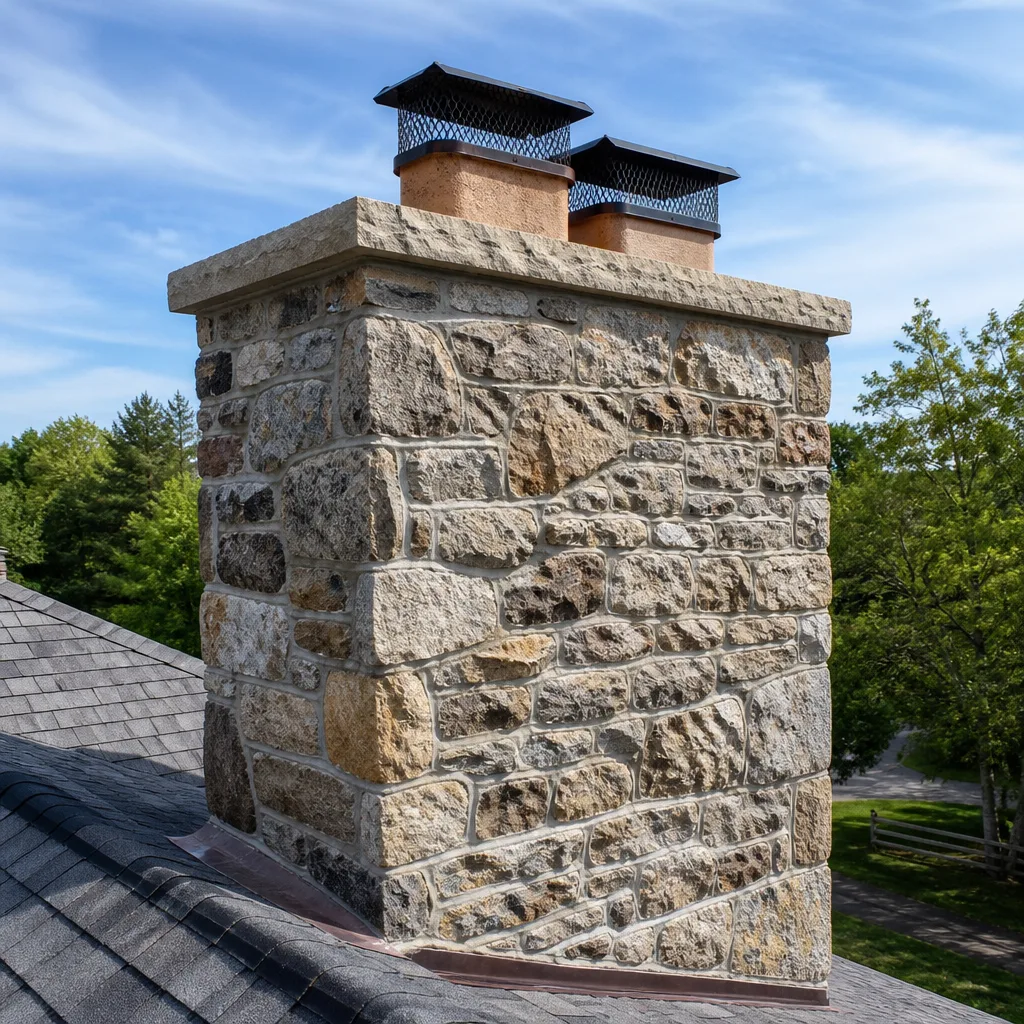 Masonry repair
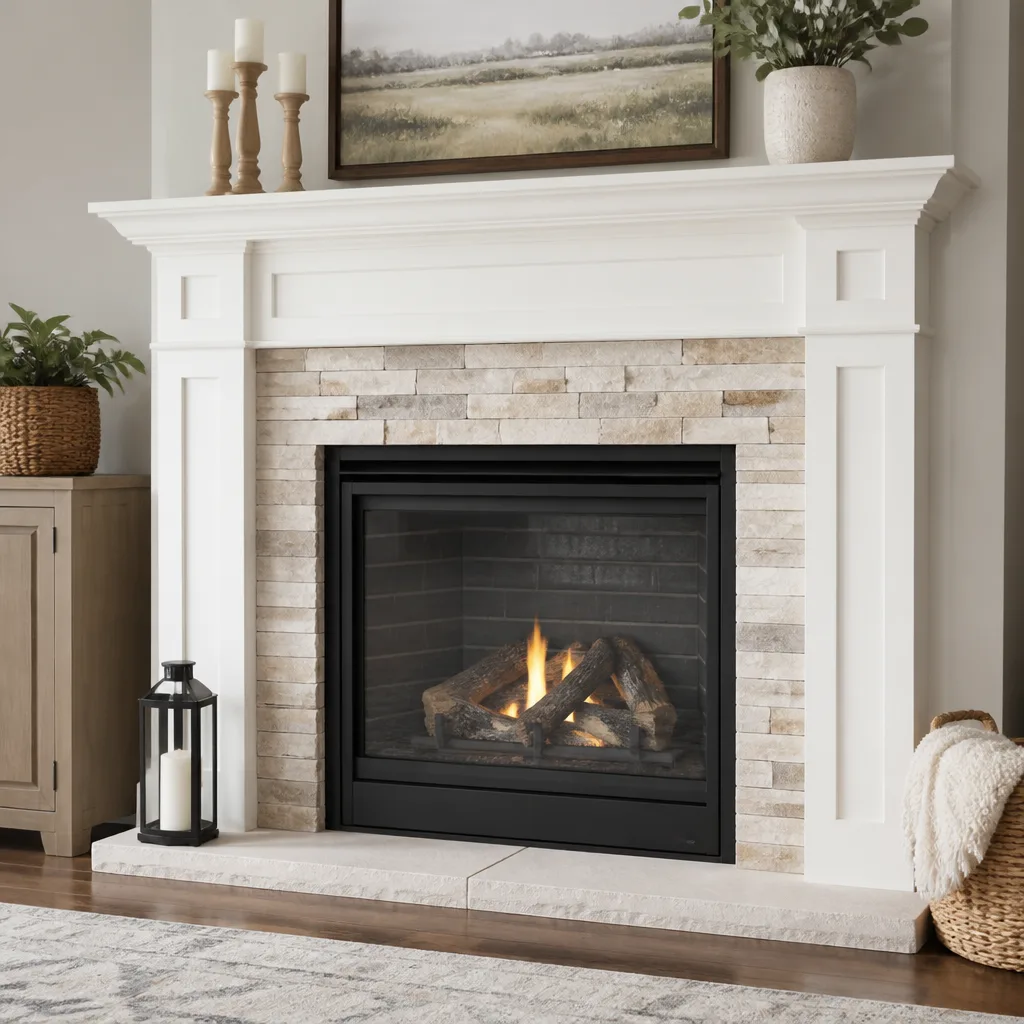 Gas fireplace service
Level 1 sweep and inspection to the NFPA 211 annual standard - flue, crown, cap, and flashing checked and photographed
Chimney sweep logs do not sweep chimneys. They loosen some creosote - which then falls where a brush and vacuum still have to collect it.
Seasonal Chimney Cleaning Care for Arden-Arcade: Year-Round Homeowner’s Guide
Most chimney maintenance advice is written for places with real winters. Arden-Arcade doesn’t have those. Our burn season is short, our summers are brutally dry, and our freeze-thaw cycles happen in compressed bursts that do outsized damage to masonry. The result: a homeowner who follows generic “clean your chimney every fall” advice ends up either booking too late to actually get service before the first cold night, or skipping maintenance entirely because the fireplace only gets used a few months a year. This guide covers what Arden-Arcade’s actual climate does to chimneys, when to schedule service so you’re not left out in the cold, and what off-season damage most homeowners never check.
Quick Answer
The optimal time to schedule chimney cleaning in Arden-Arcade is late August through mid-September, before the fall service backlog fills up 4-6 weeks out. Your chimney should also be inspected in late spring, after the Sacramento Valley’s winter rains, to catch cap damage, animal intrusion, and moisture penetration before the dry summer bakes those problems into expensive repairs. If you burn more than once a week during the season, you need an annual sweep; if you burn occasionally or have a gas insert, every two years may be sufficient unless you notice performance issues.
Styles & brands we work with
- Sweep & inspection
- Caps & crowns
- Flue relining
- Masonry repair
- Gas fireplace service
Table of Contents
- Understanding Arden-Arcade’s Actual Burn Season
- The Optimal Service Window: Why Late August Beats October
- What Sacramento Valley Summers Do to Your Chimney
- How El Niño and La Niña Patterns Change Your Service Schedule
- Off-Season Tasks That Prevent Expensive Repairs
- Why Gas Fireplaces Still Need Seasonal Attention
- How Often Should You Actually Clean Your Chimney?
- The Dryer Vent Connection: Arden-Arcade’s Second Fire Hazard
Understanding Arden-Arcade’s Actual Burn Season
Here’s what actually happens in Arden-Arcade every year: the first genuinely cold night arrives somewhere between late October and mid-November. By December, the fireplace is in regular rotation. By mid-February, most households are done burning for the season. That’s roughly four months of active use, often fewer. Compare that to Tahoe or Truckee, where stoves and fireplaces run from September through May, and you can see why generic advice misses the mark.
The shorter season doesn’t mean less maintenance, but it does change the nature of what you’re maintaining. Arden-Arcade homes tend to fall into three categories:
- Occasional burners: Fireplace used for holidays, gatherings, or the rare cold snap. These systems accumulate creosote slowly but often develop animal intrusion and cap damage during long idle periods.
- Regular burners: Fireplace used multiple nights per week from December through February. These systems build creosote at a pace similar to colder climates, even though the season is compressed.
- Gas insert households: No creosote, but burner ports collect dust, spiders nest in the gas lines, and the flue still needs integrity checks for carbon monoxide safety. We’ll get into that later.
What matters more than the calendar is the condition of your flue when you light that first fire. An Arden-Arcade chimney that’s been idle since March has had months of dry heat, possible rain exposure, and roughly eight months of opportunity for birds, squirrels, or raccoons to move in. By scheduling around the actual burn season rather than a generic “fall cleaning” schedule, you’re checking for all of those variables before they become fires or fumes.
The Optimal Service Window: Why Late August Beats October
Every Arden-Arcade chimney service picks up a predictable backlog starting in early October. It’s the same pattern every year: the first cool night hits, people remember their fireplace exists, and suddenly everyone wants a sweep before Thanksgiving. By October, most reputable services are booking four to six weeks out, which means a mid-October call gets you a late-November visit. You’re either burning in an uninspected flue for the first month of the season, or you’re waiting it out while the backlog clears.
Scheduling in late August or early September changes the math entirely:
- Availability is wide open. You can pick a time that works for you, not whatever slot is left when the phone finally rings.
- Prices are stable. Late-season availability tends to mean you’re not paying urgent-booking premiums.
- Any repairs can be done before you need the fireplace. If the sweep finds a cracked flue tile, a damaged cap, or a compromised liner, that repair gets scheduled and completed with weeks to spare. Book in late October and that same finding might mean your fireplace is out of commission for the entire holiday season.
- Moisture from the previous spring has had a full dry season to expose itself. By late summer, the effects of the prior winter’s rains are visible in the masonry. What was a small crack in March is a spalled brick by September. You want to catch it before another winter’s moisture works into it.
We see this same dynamic across the Arden-Arcade market: the homeowners who book late summer get inspected before the backlog hits, and any issues are addressed before the first burn. For a full picture of what our standard sweep includes, start with our Chimney Sweep in Arden-Arcade page.
What Sacramento Valley Summers Do to Your Chimney
Arden-Arcade’s summers are aggressively dry, routinely hitting triple-digit temperatures from June through September. That dry heat does specific, measurable things to masonry chimneys, and none of them are good.
First, the mortar starts to dehydrate. Standard Portland cement-based mortar needs adequate moisture to maintain structural integrity. When ambient humidity stays below 20% for weeks at a time, the mortar’s surface layers dry out unevenly, leaving the joints brittle and prone to micro-fracturing. These hairline cracks are invisible from the ground, but they’re entry points for moisture the next time rain hits. The pattern we see repeatedly in older Arden-Arcade neighborhoods is this: decades-old mortar joints that survived decades of normal wear suddenly start showing spalling brick faces after a few intense summer cycles. The dehydration weakens the joint, winter moisture seeps in, and the freeze-thaw cycle expands that moisture enough to pop the brick face off. It’s a one-two punch that starts with the summer heat and finishes in the winter cold.
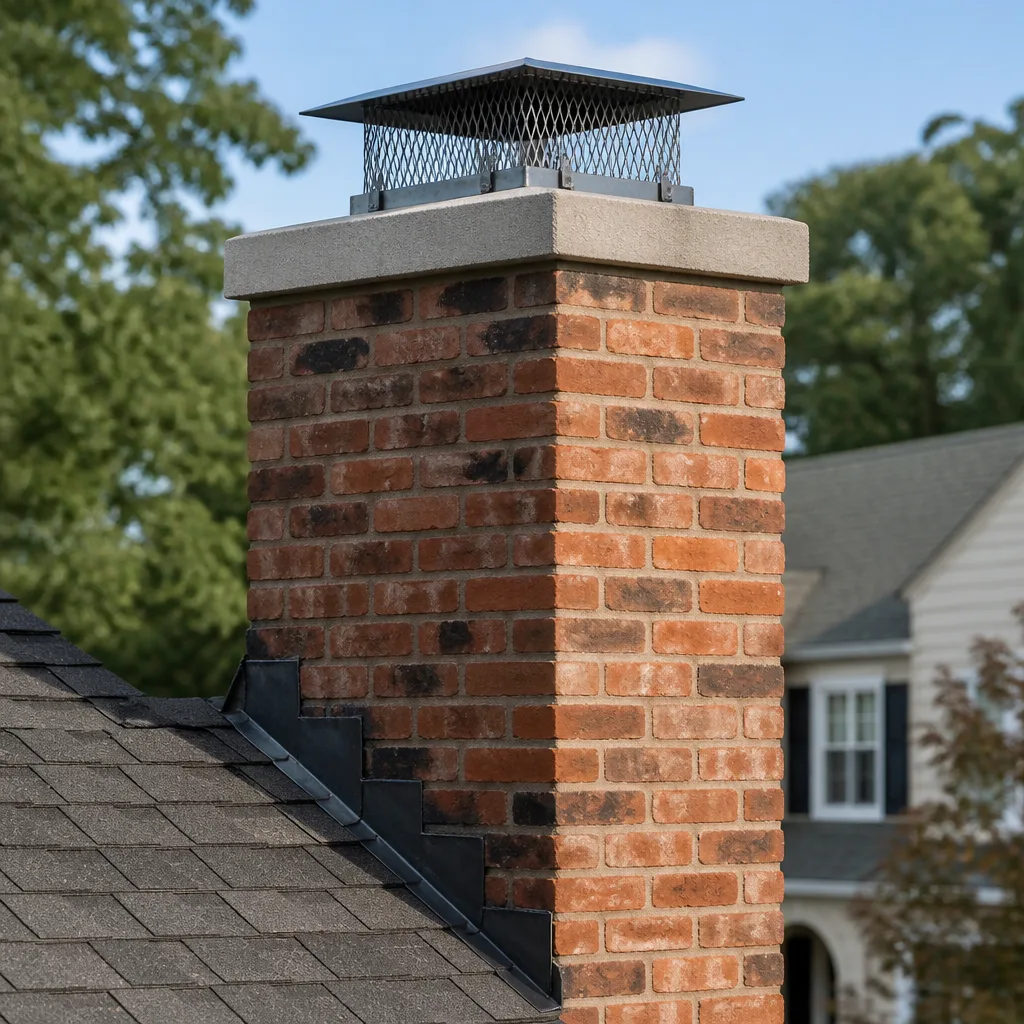
Second, the chimney cap takes a beating from UV exposure. Most caps in the Arden-Arcade area are either galvanized steel or stainless steel. Galvanized caps in particular have a lifespan in this climate that’s shorter than manufacturers advertise, because the UV intensity at this latitude is brutal. When a galvanized cap’s protective coating breaks down, the cap rusts through at the seams, and suddenly rain is falling directly into the flue. On a masonry chimney, that water soaks the clay tile liner and the mortar joints from the inside, which accelerates the same spalling we described above.
Here’s what to look for before the first fall burn:
- Rusted-through cap seams or screw holes. This means rain has been getting in during the winter months, even if the cap looked fine from the ground.
- Spalled or flaking brick faces on the chimney’s exterior. This is the summer-heat-then-winter-moisture failure pattern showing itself.
- Mortar joints that look like cracked mud or have visible gaps. Run your finger across the joint: if it powders away, the dehydration cycle has started doing damage.
- Evidence of animals. Every summer, we pull dead birds, bird nests, and squirrel debris out of flues that were clean the previous spring. The off-season is moving season for local wildlife.
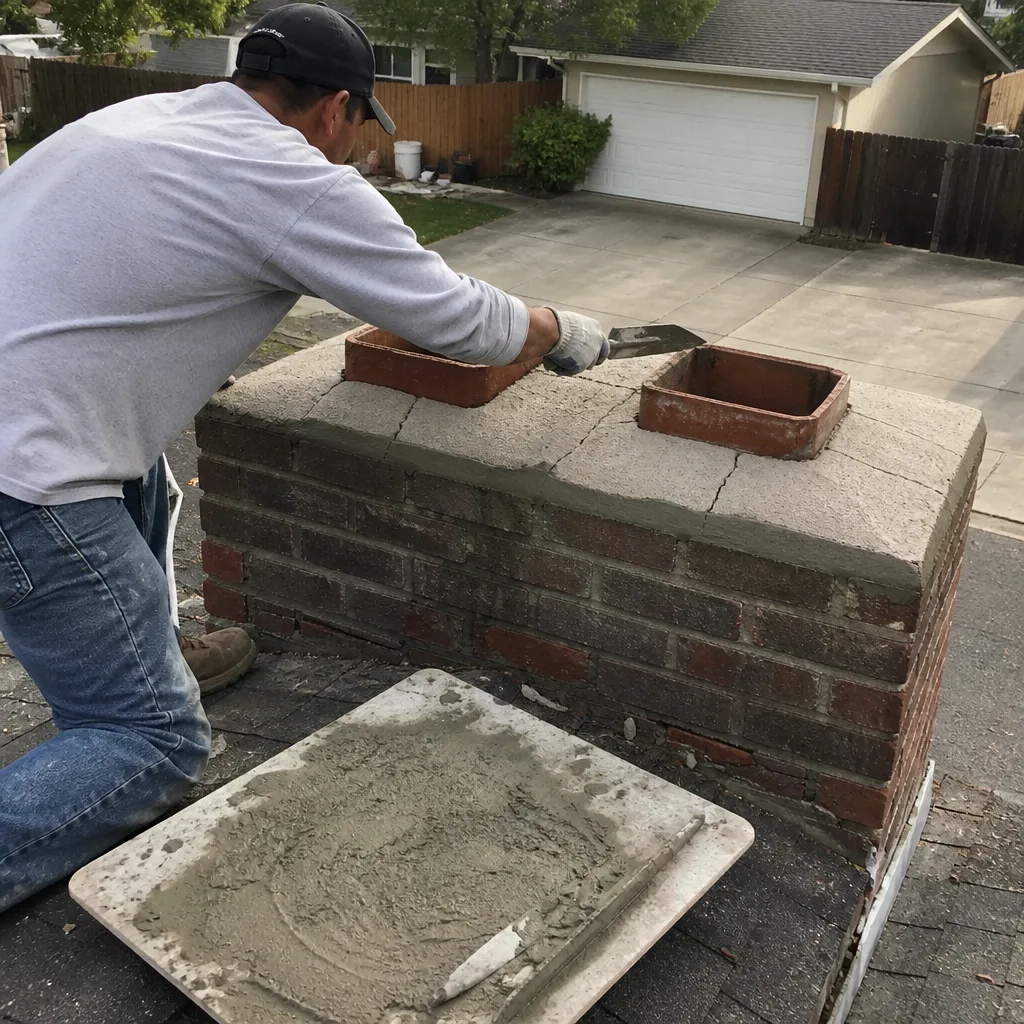
If you’re seeing any of these conditions, a sweep and inspection will clarify the scope. Many homeowners in Arden-Arcade don’t realize that a full-service company can address these findings in a single visit. We can often repair a cap, repoint mortar, or remediate minor masonry damage as part of a cleaning appointment, which means the home goes into the burn season with everything addressed. That’s the whole point of our Chimney Repair in Arden-Arcade service: the sweep and the repair happen together, not as two separate appointments booked weeks apart.
How El Niño and La Niña Patterns Change Your Service Schedule
Most homeowners never think about Pacific Ocean temperature cycles when deciding whether to get their chimney cleaned. They should. El Niño and La Niña patterns have a measurable effect on how often Arden-Arcade residents actually use their fireplaces, which directly affects creosote accumulation rates.
During El Niño winters, the Sacramento Valley tends to be wetter than average. That means fewer burn days. Arden-Arcade homeowners who normally run their fires two or three nights a week might not light up for weeks at a stretch during an El Niño year. Lower burn frequency means slower creosote buildup, which could shift an annual cleaning to an every-18-month or every-24-month interval for that year only. What matters isn’t the calendar, it’s the burn hours on the flue.
During La Niña winters, the pattern flips. The air gets colder and drier than average, and while we don’t get the kind of sustained below-freezing temperatures that mountain regions do, we do get more nights below 40 degrees. That means more burn days, more creosote, and a stronger case for annual cleaning even if you’re normally an occasional burner.
Here’s the practical side: if forecasters are calling for an El Niño winter, you can reasonably extend your service interval by six months. If they’re calling for La Niña, don’t skip the annual sweep, even if last year’s inspection came back clean. The creosote buildup you create in a cold, dry winter is the exact type that causes chimney fires: hard, shiny, and concentrated in the upper third of the flue where smoke condenses fastest.
The one thing that doesn’t change with weather patterns is the need for an annual visual inspection, even if a full sweep isn’t warranted. Arden-Arcade’s climate cycles put unique stresses on masonry and caps regardless of how often you burn.
Off-Season Tasks That Prevent Expensive Repairs
The best time to catch a chimney problem in Arden-Arcade is late spring, right after the last meaningful rain of the season. Here’s why: whatever water got into your chimney system during the winter is now sitting in the masonry, doing its worst. The freeze-thaw cycle of a cold snap has already done its damage. And the upcoming dry summer is going to dehydrate and crack any compromised mortar or brick, magnifying whatever small problem existed in March into a much larger one by September.
The off-season tasks that matter most for Arden-Arcade homeowners:
- Post-rain moisture assessment. After the last spring rain, check the ceiling around your chimney penetration for water stains, and look for visible dampness or salt deposits (efflorescence) on the chimney’s exterior brick. If you see white, powdery residue on the brick, water is moving through the masonry and evaporating on the surface. That’s not cosmetic; it’s a sign that moisture is trapped inside the structure.
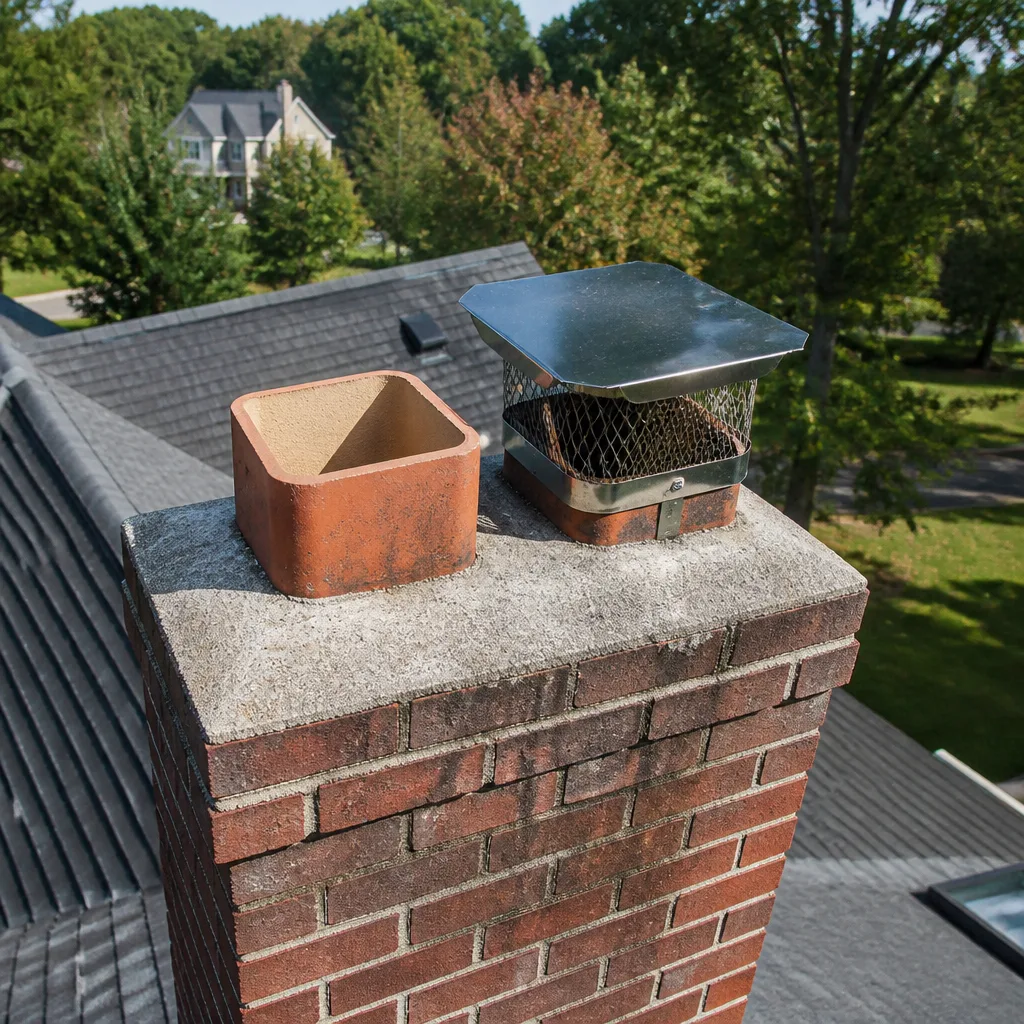
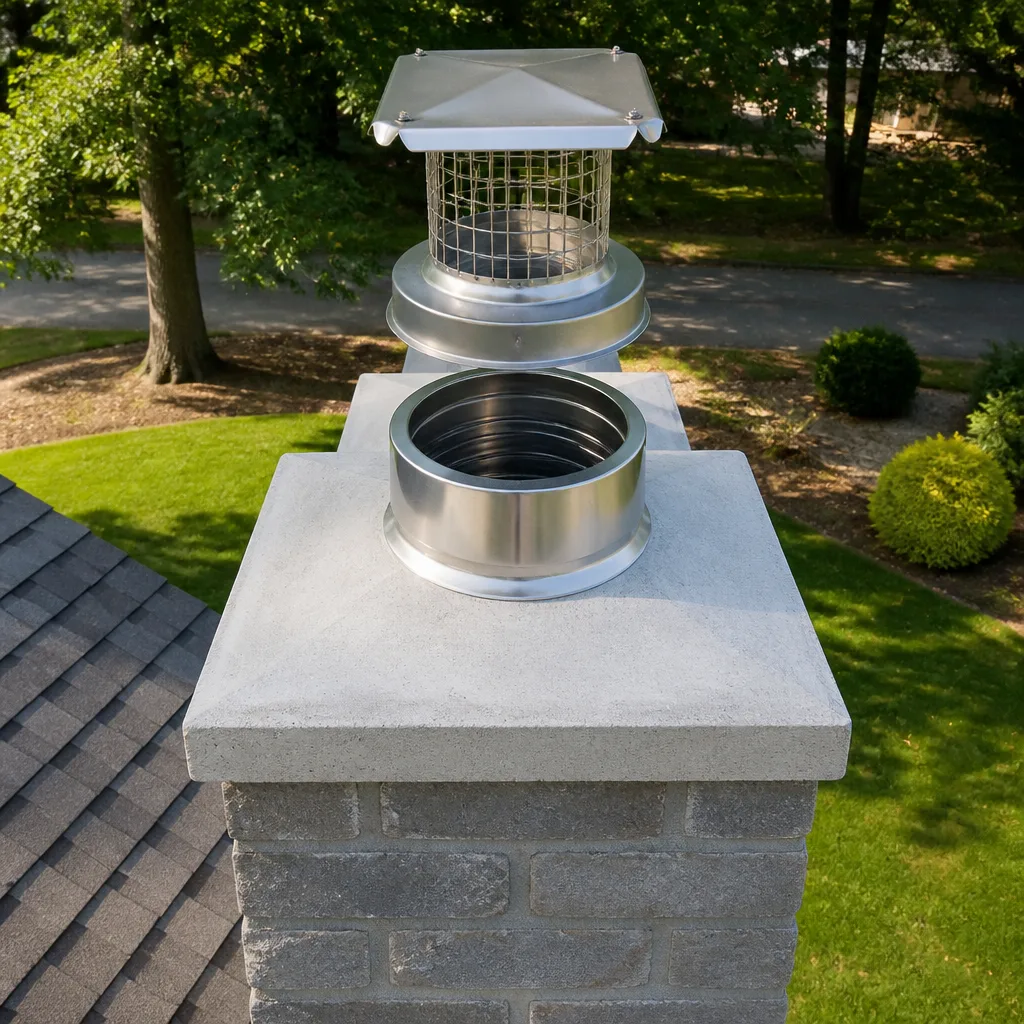
- Cap and screen inspection. A quick rooftop look (or a drone video from us, if you’re not comfortable on a ladder) at the cap and spark arrestor screen. Check for rust, loose fasteners, or holes in the screen mesh. A dollar-sized hole in a spark arrestor is an open doorway for a squirrel, and Arden-Arcade squirrels don’t need a wider invitation.
- Animal intrusion check. Every spring, we pull wildlife debris out of flues that were clean the previous fall. Birds, squirrels, and rats all look for elevated, enclosed spaces in late winter and early spring. The telltale signs are nesting material in the flue, droppings on the smoke shelf, or scratching sounds inside the chimney. If you hear anything moving up there, don’t light a fire until it’s been cleared.
- Dry-season masonry evaluation. Once the rainy season is behind you and the summer heat has started, walk around the chimney and look at the mortar joints. If the joints are cracking, powdering, or receding, that’s a repointing job in the making. The sooner it’s addressed, the less the water will penetrate next winter.
These checks take roughly 20 minutes and don’t require any special tools beyond a ladder and a decent look at the chimney top. If you’d rather not climb on the roof, we’ll do the off-season inspection as part of an annual service and show you exactly what we found. That transparency is built into our process: we show you what we find, not just hand over an invoice.
Why Gas Fireplaces Still Need Seasonal Attention
There’s a persistent myth among Arden-Arcade homeowners with gas inserts: no wood, no creosote, no chimney sweep needed. That’s dangerous logic, and it misses the actual way gas fireplaces fail in this climate.
Gas fireplaces may not produce creosote, but they do produce carbon monoxide. That CO is harmless when it vents correctly through a properly maintained flue. When the flue is compromised by animal intrusion, a blocked exhaust path, or masonry debris, the CO doesn’t leave the house. It collects where the family is sleeping. Every year, CO poisoning incidents trace back to gas fireplaces and vented gas logs that were assumed to need no maintenance.
The other gas fireplace issue we see constantly in Arden-Arcade is spider nesting in the burner ports. Sacramento Valley spiders are prolific, and a gas burner that’s been idle since February is a warm, dark, perfectly sized spider habitat by the following November. When you light the burner for the first time, the spider webs clog the gas flow, causing improper fuel-air mixing. At best, this produces a lazy, yellow flame that wastes fuel and soots up the glass. At worst, it creates a dangerous gas leak inside the firebox or causes a small flare-up that damages the ceramic logs.
Gas fireplace service is simpler than a wood-burning sweep, but it’s not a skip. The standard check involves:
- Flue inspection for blockages, animal debris, or liner damage
- Burner port cleaning (this is where the spider nests get cleared)
- Gas connection integrity check
- Pilot light and thermocouple evaluation
- Carbon monoxide testing during operation
If you have a gas insert and haven’t had it serviced in several years, consider booking a chimney sweep in Arden-Arcade that includes gas flue evaluation. It’s an hour of prevention that keeps a documented, preventable hazard out of your home.
How Often Should You Actually Clean Your Chimney?
The National Fire Protection Association standard says chimneys should be inspected at least once a year and cleaned as necessary. That’s the national benchmark, but Arden-Arcade’s climate means “as necessary” varies more than the standard suggests. Here’s our practical guidance based on years of sweeps in this specific market:
Annual sweep (non-negotiable): Homes that burn more than once a week during the season, regardless of wood type. If you’re lighting fires three or four nights per week from December through February, you’re generating enough creosote to warrant a full sweep every year. The condensed burn season means you’re generating the same output as a colder-climate home in about half the time, which often results in denser, more concentrated deposits.
Every two years: Homes that burn occasionally (once or twice a month), use seasoned hardwoods only, and have a properly sized flue. These systems accumulate creosote slowly, but they still need a professional inspection every year to check for blockages and animal intrusion. Between inspections, you’re looking for the start of the bigger problems.
Every three years (maximum interval): Gas inserts and gas log sets. These systems should have their flue inspected annually for CO safety and animal intrusion, but a full “sweep” in the traditional sense isn’t required as long as the flue is clear and the burner is functioning properly.
One factor that affects Arden-Arcade homeowners more than most: seasoned wood availability. The Sacramento Valley doesn’t have the same density of hardwood forests as colder climates, which means market firewood quality varies. Unseasoned or partially seasoned wood produces dramatically more creosote than properly cured wood, sometimes doubling the accumulation rate. If you’re buying firewood by the cord from a roadside seller and it still feels heavy and damp, you’re likely burning wetter wood than you think, and your sweep interval should be shorter as a result.
The Dryer Vent Connection: Arden-Arcade’s Second Fire Hazard
Chimney fires get the headlines, but dryer vent fires are just as common and kill just as effectively. The Arden-Arcade climate contributes to dryer vent problems in ways most homeowners don’t anticipate: low humidity means more static cling in the laundry, which means more lint generation. That lint accumulates in the vent every time you dry a load of towels or bedding, and over time the dryer has to push hot air through a smaller and smaller opening.
A clogged dryer vent isn’t just about fire risk. The performance degradation is measurable: drying cycles that used to take 45 minutes stretch to 75 or 90. The dryer runs hotter and longer, which shortens its service life and increases your energy bill. Arden-Arcade’s older homes, particularly those built in the 1950s and 60s, often have long, convoluted dryer vent runs that snake through walls or across attic spaces, which makes lint buildup even more likely than in newer construction.
The chimney and dryer vent connection is practical, not conceptual: both are vertical or horizontal exhaust paths that carry particulates and hot air away from the living space. Both fail when neglected. Both are fire hazards. And both are things we handle on the same service call. If your chimney is due for a sweep and you don’t remember the last time your dryer vent was cleaned, that’s a two-fire-hazard problem solved in one visit. Our dryer vent cleaning in Arden-Arcade is exactly this: one scheduling, both systems addressed.
The frequency guidance for dryer vents is simpler than for chimneys: every 12-18 months for most households, every 12 months if you have a large family doing heavy laundry loads, and immediately if your dryer is running noticeably hotter than it used to. If you can feel heat radiating off the dryer cabinet while it’s running, that heat is supposed to be going out the vent. It’s not. That’s the signal to call.
Common Mistakes to Avoid
- Scheduling your cleaning in October “because winter is coming.” As we covered, that’s already four to six weeks too late in Arden-Arcade. You’ll be burning in an uninspected flue for the first month, or waiting longer than you should. Late August is the sweet spot.
- Assuming a gas insert means zero maintenance. Gas fireplaces don’t build creosote, but they absolutely do build spider nests in burner ports and carbon monoxide risks in blocked flues. Annual gas system inspection is essential.
- Ignoring the chimney during summer months. The Sacramento Valley’s dry heat is actively breaking down masonry while you’re not using the fireplace. If you only think about the chimney during the burn season, you’re noticing problems six months after they started.
- Burning unseasoned Arden-Arcade firewood. Wet wood creates dramatically more creosote than seasoned hardwood, and our local firewood market has plenty of sellers passing off partially cured wood. If your wood hisses or bubbles when it burns, that’s moisture, and that’s creosote.
- Waiting to clear animal intrusion. If you hear scratching in the chimney, waiting until fall to deal with it means the animal is still in there when it’s time to light the first fire. A sweep that removes the animal and its nesting material should happen promptly, not seasonally.
- Cleaning the chimney but ignoring the dryer vent. These are parallel fire hazards in the same house. The household that maintains one and not the other has reduced its risk by roughly half.
- Getting a sweep without a camera inspection. A visual sweep alone can miss cracked flue tiles and liner damage that are visible only with a camera scan. Without that, you’re getting half a service and thinking the chimney is clean when the structural problem is still there.
See the difference
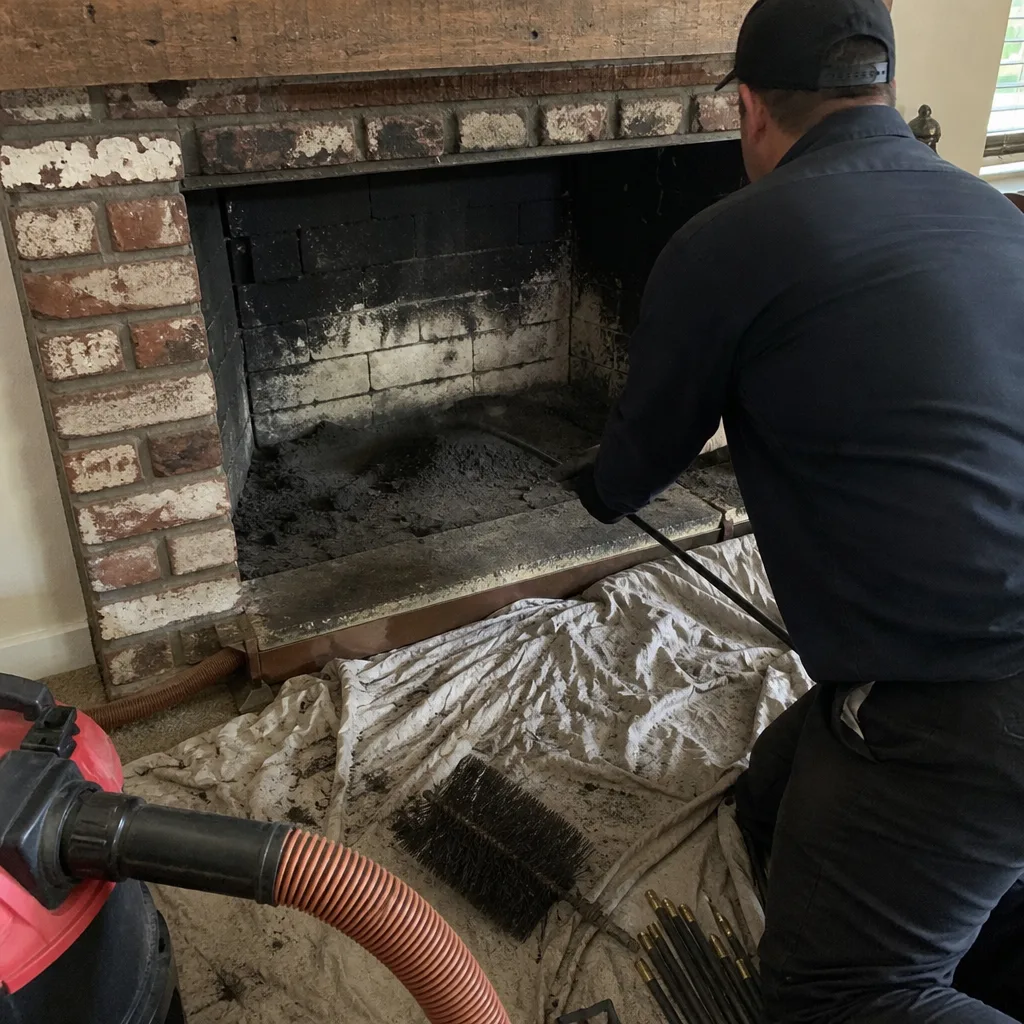 Before
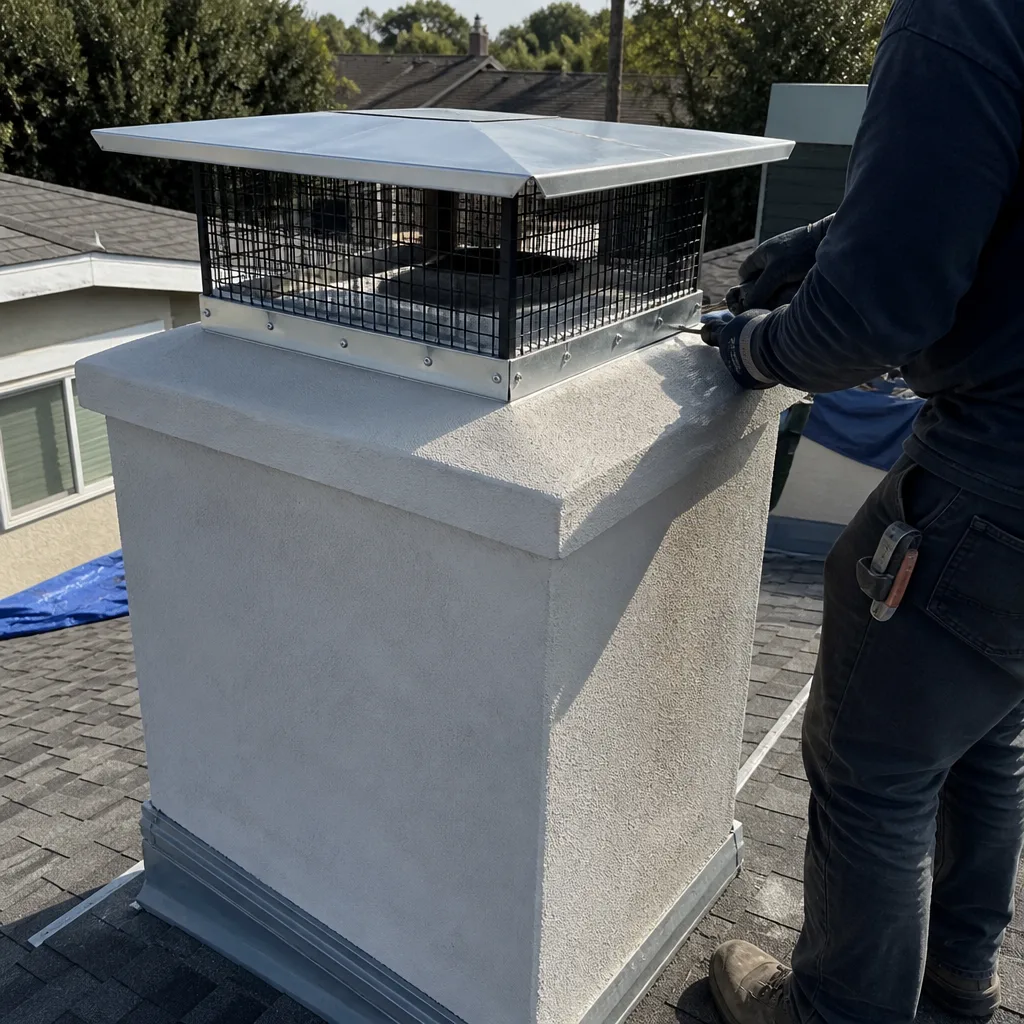 After
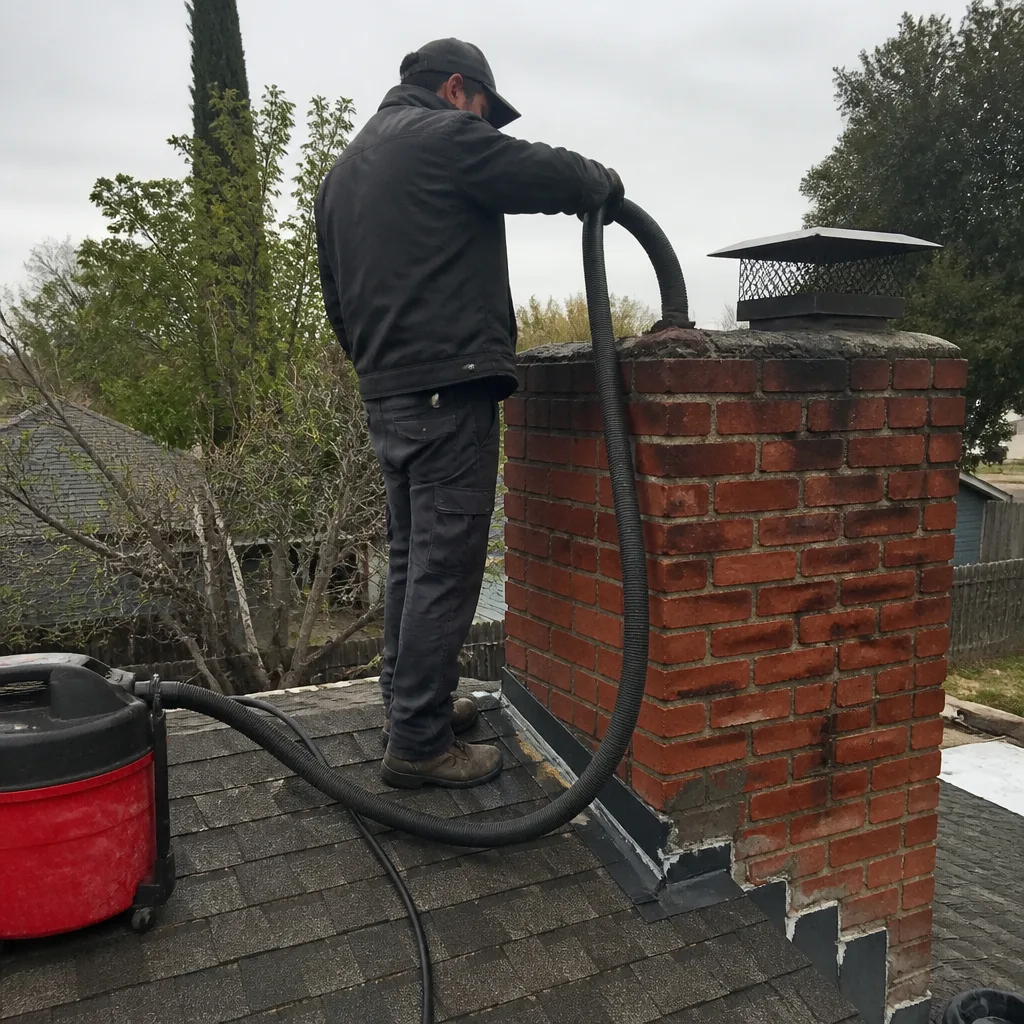 Before
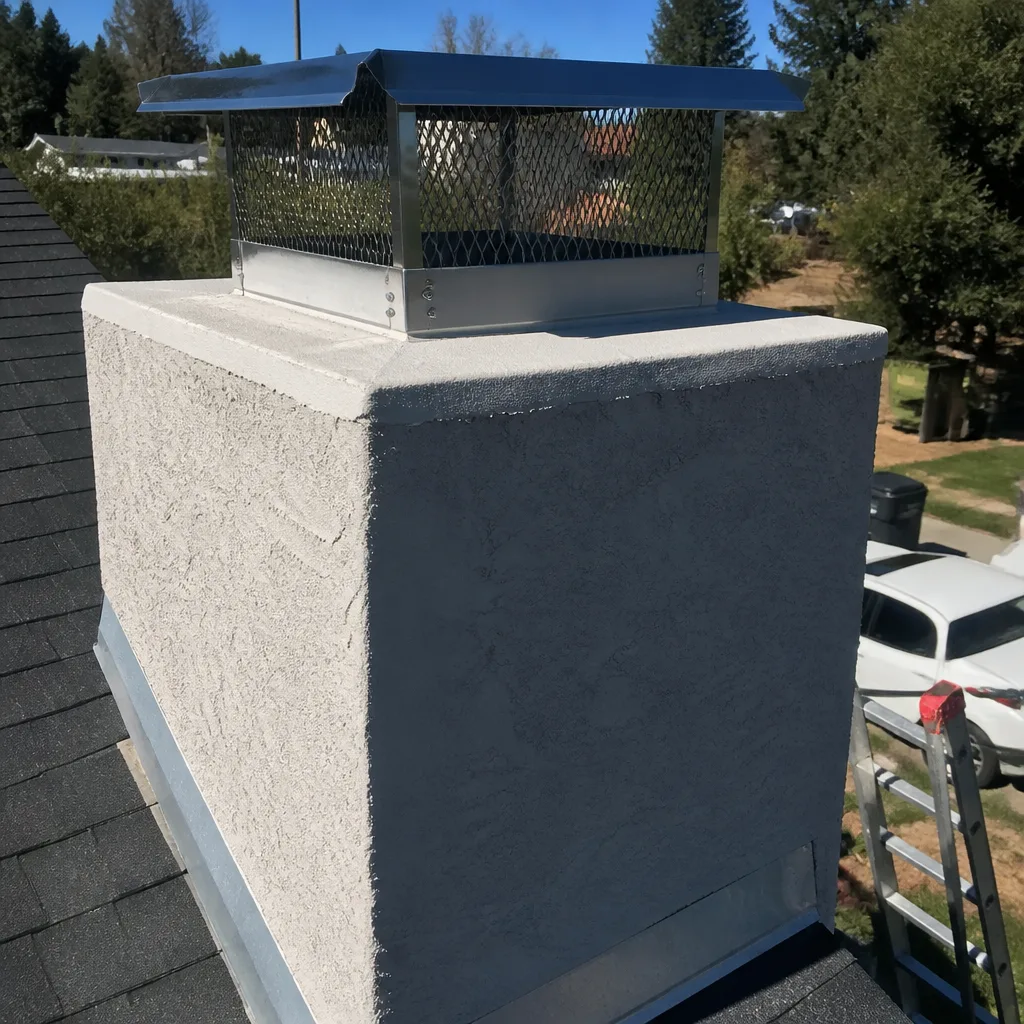 After
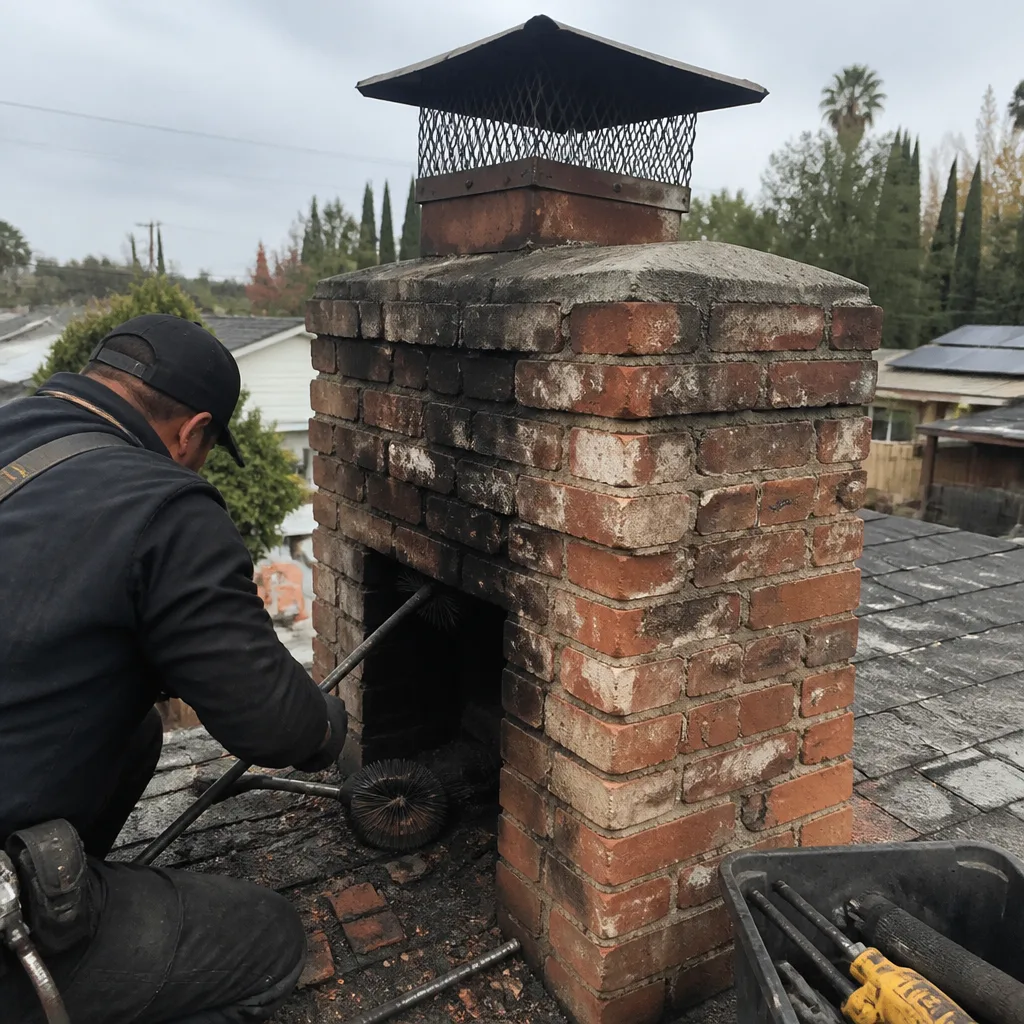 Before
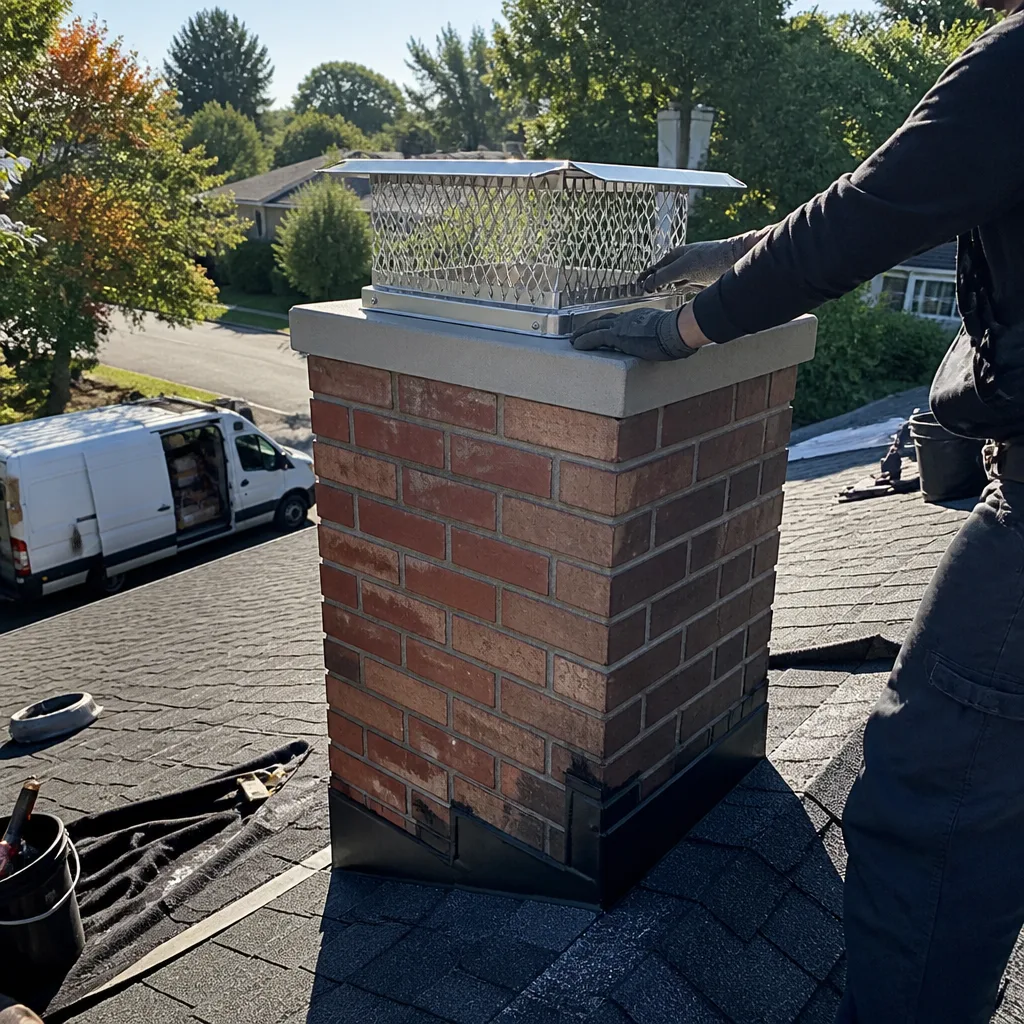 After
When to Call a Professional
Any of these situations warrants a professional inspection sooner rather than later: you see water staining on the ceiling near the chimney, you smell smoke or gas when the fireplace isn’t in use, you hear animal sounds in the chimney, you’ve skipped a sweep for two or more burn seasons, or you notice spalling brick or cracking mortar on the chimney exterior. Also call if you’re buying a home with an existing fireplace: there’s no way to know what the flue looks like without a camera inspection, and the previous owners probably don’t know either. Chimney Sweep Arden-Arcade offers free estimates in Arden-Arcade. Call (833) 589-9906 to schedule a sweep or inspection, and we’ll show you exactly what we find.
Frequently Asked Questions
A standard chimney sweep in Arden-Arcade typically costs between $175 and $325, depending on the level of inspection and whether a camera scan is included. Repairs like cap replacement, repointing, or flue resurfacing are quoted separately. Call (833) 589-9906 for a specific quote, and our service in Arden-Arcade includes a clear explanation of what you’re paying for before we start.
Sometimes yes, sometimes no. Hairline cracks in clay tile liners may not require immediate replacement, but any significant cracking in a flue that’s actively used for wood burning is a code concern and a fire hazard. We don’t recommend liner work unless we can show you the camera evidence of why it’s needed, and we use DuraFlex liner systems when a replacement is actually warranted. Nothing is recommended without proof you can see for yourself.
For wood-burning fireplaces used more than once a week during the season, every year. For occasional burners, every two years with an annual visual inspection in between. For gas inserts, annual inspection with a full sweep every three years or as needed based on flue condition. Arden-Arcade’s short burn season concentrates creosote accumulation, so don’t assume a shorter season means less maintenance.
For a home that burns regularly, skipping one year means roughly two seasons of creosote accumulation in the flue. That’s often enough to push a chimney from “normal buildup” into “elevated fire risk” or “blockage” territory. Even if the chimney doesn’t catch fire, the buildup accelerates liner deterioration by trapping moisture against the flue walls. The economic math is straightforward: a sweep costs a few hundred dollars. A liner replacement costs thousands.
Yes. We handle both systems on the same visit, which is why clients in Arden-Arcade often book them together. Both are fire hazards, and both follow the same seasonal logic: check them before they fail, not after. Our dryer vent cleaning in Arden-Arcade is scheduled as part of the same appointment whenever possible.
No, it means different maintenance. Our dry summers dehydrate and crack mortar joints that then absorb moisture during the winter rains. The freeze-thaw cycle does the rest. What you skip in creosote removal from less burn time, you make up for in masonry and cap maintenance from the hotter, drier climate. The same professional-grade materials we use, including HeatShield and Copperfield components, are chosen specifically because they hold up in this climate.
The Bottom Line
Arden-Arcade homeowners need a chimney maintenance schedule that fits the Valley’s actual seasons, not a generic fall-cleaning checklist. Book late summer, before the October backlog. Inspect again in late spring, after the rains stop. Pay attention to masonry and cap condition during the dry months. Don’t assume gas fireplaces or occasional wood burning exempt you from maintenance, and don’t neglect the dryer vent while you’re at it. The companies that last in this market are the ones that can handle cleaning, repair, and relining in a single engagement with materials built for the long haul. Find out more at Chimney Sweep Arden-Arcade home, or call (833) 589-9906 for a free estimate.
Written by the team at Chimney Sweep Arden-Arcade, serving Arden-Arcade since 2017.