
Last updated November 2, 2026
 Sweep & inspection
 Caps & crowns
 Flue relining
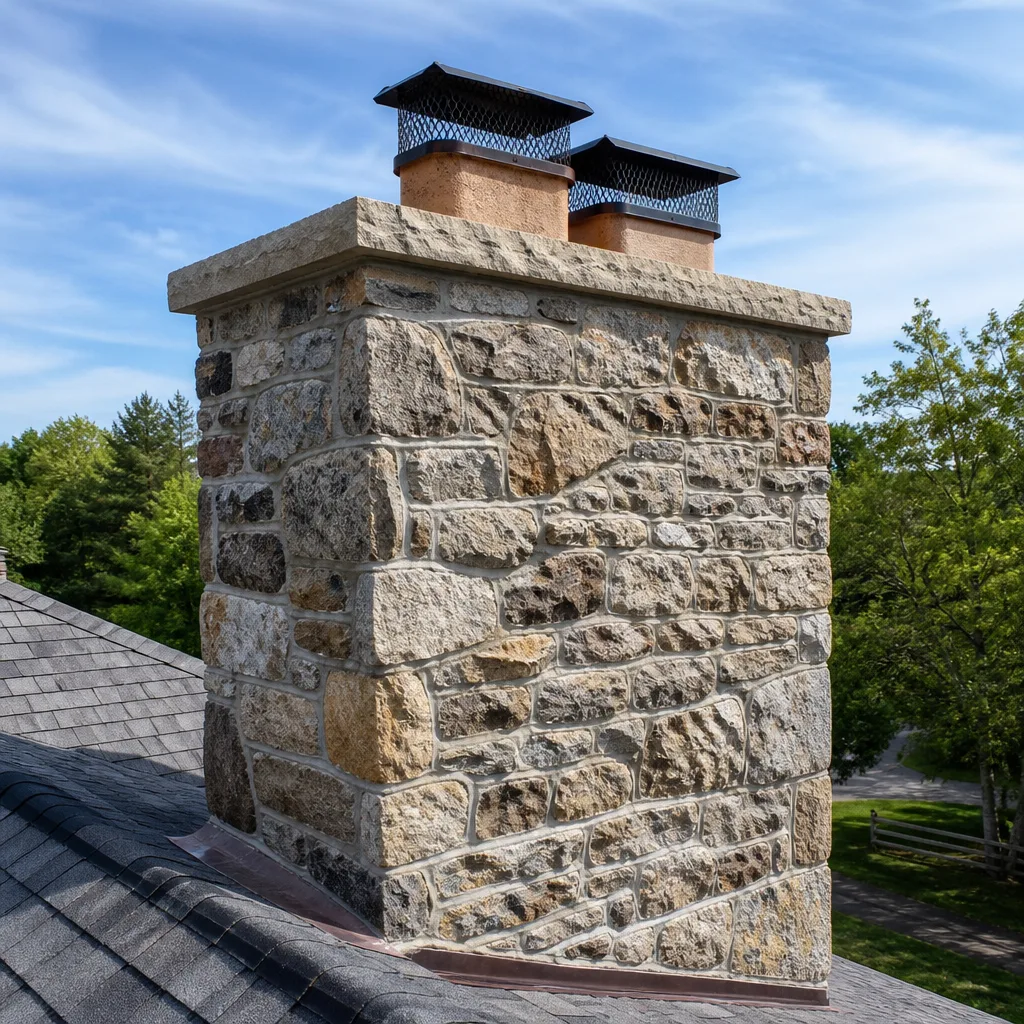 Masonry repair
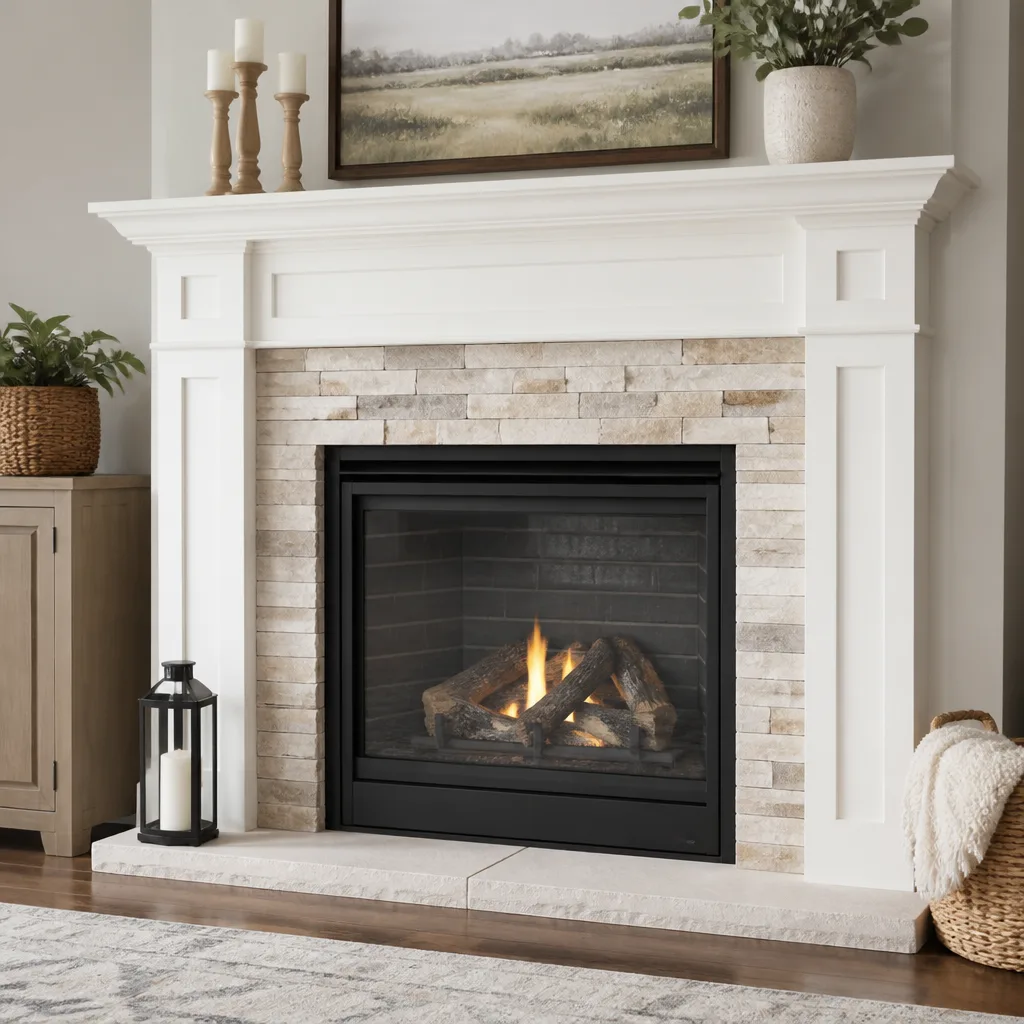 Gas fireplace service
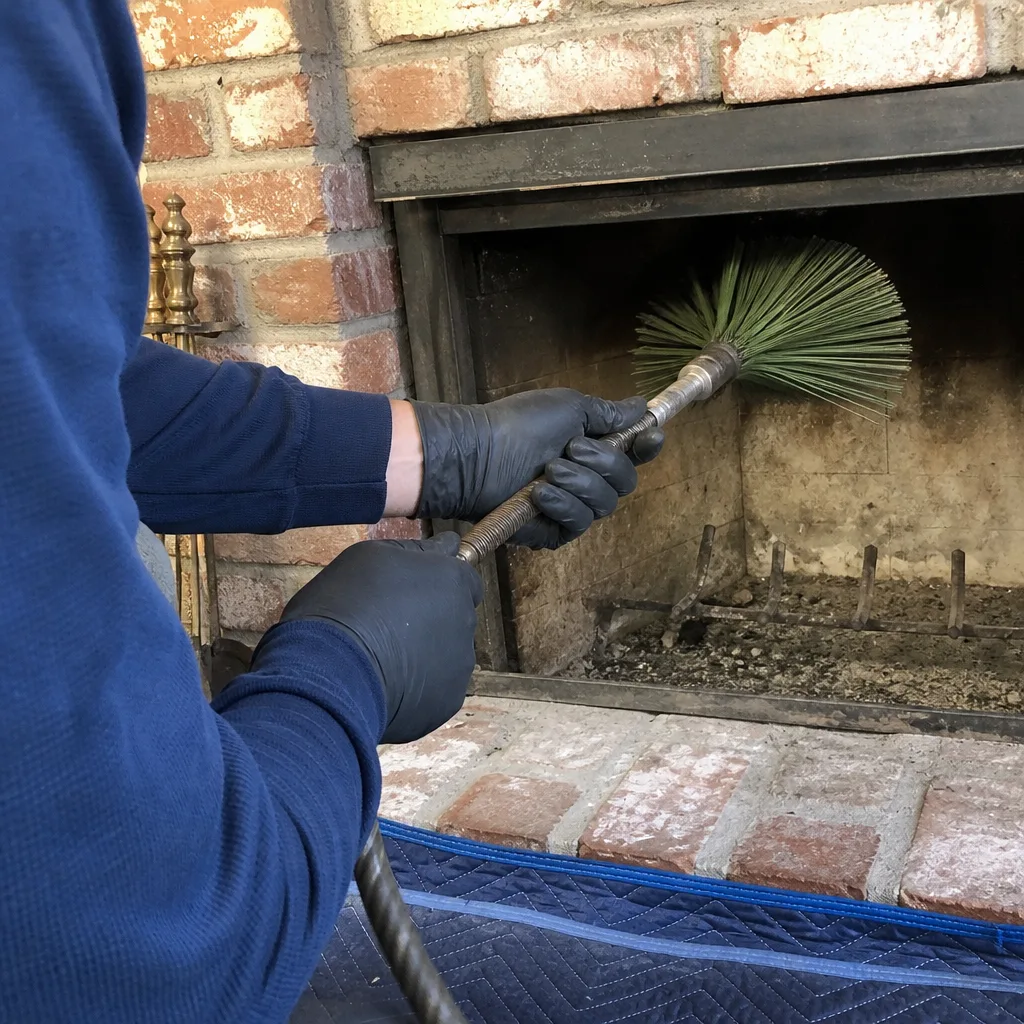
Level 1 sweep and inspection to the NFPA 211 annual standard - flue, crown, cap, and flashing checked and photographed
Chimney sweep logs do not sweep chimneys. They loosen some creosote - which then falls where a brush and vacuum still have to collect it.
Chimney Cleaning Warning Signs: An Arden-Arcade Homeowner’s Reference Guide
White staining on exterior brick isn’t cosmetic. That chalky residue is efflorescence, and it means water is actively moving through your masonry. By the time it’s visible on the outside of your chimney, it has already been working on the inside of your flue system for months, breaking down mortar joints from within. Most Arden-Arcade homeowners don’t discover a serious chimney problem because they see a crack or smell smoke. They discover it because someone finally looked where nobody looks. This guide maps the specific indicators that warrant a call before the smell of smoke or a visible crack ever appears, and you can explore more guides & resources once you’ve identified what you’re seeing. We’ve spent years on Arden-Arcade rooftops, and the patterns are consistent: the homes that need the most work are the ones where warning signs sat unread for two or three burning seasons.
Quick Answer
Chimney cleaning warning signs fall into five categories you can check yourself: white staining (efflorescence) on exterior brick, dark tar-like buildup visible on the firebox walls, unusual odors coming from the fireplace, smoke that drafts into the room, and rust staining on the damper or firebox. If you notice any two of these together, stop using the fireplace and schedule an inspection. In Arden-Arcade, where temperature swings between summer highs and winter lows stress masonry differently than coastal climates, these signs typically appear earlier in a chimney’s life than homeowners expect.
Styles & brands we work with
- Sweep & inspection
- Caps & crowns
- Flue relining
- Masonry repair
- Gas fireplace service
Table of Contents
- Firebox Indicators You Can Check From Floor Level
- What Chimney Odors Actually Tell You
- Smoke Behavior: Ignition vs. Established Fire Problems
- Exterior Masonry Changes Specific to Arden-Arcade Homes
- When a Warning Sign Is Informational vs. When to Stop Using the Fireplace
- The Dryer Vent Connection: A Second Fire Hazard Worth Checking
- Common Mistakes to Avoid
- When to Call a Professional
Firebox Indicators You Can Check From Floor Level
You don’t need a ladder or a headlamp to spot most early chimney problems. The firebox itself, which is the chamber where your fire burns, tells you more than almost any other part of the system. Here’s what to look for, and what each indicator means.
Glazed Creosote: The Shiny Black Residue
Run your finger along the firebox wall above the grate line. Soot feels powdery and brushes off easily. Creosote feels different. Stage one creosote is flaky and brownish. Stage two is crusty and black. Stage three, the dangerous one, is glazed. It looks like a shiny, tar-like coating, almost like someone painted the inside of your firebox with melted plastic. Glazed creosote means your fires are burning cool, often because of unseasoned wood or a restricted air supply. It’s highly combustible and is the primary fuel for chimney fires in Arden-Arcade homes. In our experience, when we see glazed creosote in the firebox, the flue above it is usually worse, because that’s where the smoke cools and condenses most aggressively.
Spalling Firebrick: When Brick Faces Start Flaking
Look at the firebrick that lines the inside of your firebox. Spalling is when the surface of the brick flakes away in thin layers, leaving a scalloped or pitted appearance. You might find small fragments of brick on the firebox floor. Spalling means the firebrick has absorbed moisture at some point and then been heated rapidly. The moisture expands inside the brick and pops the surface off. Once spalling starts, the firebrick loses its ability to protect the structure behind it from direct heat. In Arden-Arcade, we see this most often in homes where a chimney cap was missing or damaged for a season or two, letting rain directly into the firebox.
Rust Staining on the Damper Plate
Open your damper and look at the metal plate. Rust staining on the damper means one of two things: water is getting down the flue, or condensation is forming inside the chimney at a higher rate than it should. Both are problems. Water down the flue usually means a damaged or missing chimney cap. Excessive condensation usually means your flue is oversized for the appliance it serves, so the smoke cools too quickly inside the flue and deposits moisture along with creosote. A rusted damper will eventually seize. You’ll find out it’s seized on the first cold night of the season when you can’t get it open, which is also when you need it most.
One more firebox item worth checking: look at the mortar joints between firebricks. If you can see gaps or crumbling mortar, heat is getting through to the chimney structure behind the firebox. That’s a structural red flag, not just a cosmetic one.
What Chimney Odors Actually Tell You
Chimneys have a smell. That’s normal. But specific odors mean specific things, and learning to distinguish them is one of the fastest ways an Arden-Arcade homeowner can identify a developing problem before it becomes expensive.
Tar-Like or Asphalt Odor
A tar-like or asphalt smell coming from your fireplace, especially on humid days or days when the house is running a negative pressure, almost always indicates stage three glazed creosote. This is the creosote that forms when wood smoke condenses at low temperatures. It smells like road tar or a freshly sealed driveway. It also burns extremely hot if it ignites. If you smell this, stop using the fireplace and call a chimney sweep in Arden-Arcade before the next fire. The smell means the creosote layer is thick enough to be off-gassing, which is a heavy buildup.
Musty or Damp Odor
A musty smell means moisture is entering the chimney and not drying out. The most common source in Arden-Arcade homes is a damaged chimney cap or a cracked crown, the concrete slab that caps the chimney structure. Water gets in, soaks into the masonry and any creosote deposits, and creates a damp environment. The smell gets worse in summer when the chimney acts like a reverse chimney, pulling warm outside air down into the house. Musty odor is an early warning sign. Water intrusion left unaddressed leads to spalling brick, deteriorated mortar joints, and eventually a flue liner that needs replacement, which is a far more expensive repair than the cap or crown work it would have taken to prevent it.
Animal Odor
Dead animal smell is unmistakable, but even a living animal leaves traces. Birds, squirrels, and raccoons all nest in uncapped chimneys. A live squirrel in a flue smells like urine and droppings. A dead one smells like rot. Both mean the chimney has been uncapped or the cap has a gap large enough for animals to enter. Nesting material inside a flue is a serious fire hazard, because twigs, leaves, and dried grass ignite easily and burn hot. In Arden-Arcade, we’ve found squirrel nests packed so tightly into flues that the fireplace wouldn’t draft at all. The homeowner’s only prior clue was a faint animal smell they’d noticed for weeks.
Smoke Behavior: Ignition vs. Established Fire Problems
How smoke behaves tells you about the health of your chimney system. The timing of when smoke drafts into the room matters, because it points to different root causes. Here’s how to read it.
Smoke Drafting Into the Room at Ignition
When smoke rolls into the room the moment you light the fire, but then gradually drafts correctly as the fire heats up, the problem is usually an air pressure issue, not a flue blockage. Cold air sits in the flue. Your house is warm. The warm air wants to rise, the cold flue air wants to sink, and until the flue warms up, the smoke follows the path of least resistance, which is into your living room.
This is a common problem in Arden-Arcade homes built with tight envelopes and central heating systems that create negative indoor pressure. The fix is usually a pre-heating technique: hold a lit rolled newspaper up inside the firebox near the open damper for 30 to 60 seconds before lighting your kindling. This warms the air column and reverses the downdraft. If the problem persists after pre-heating, or happens on every fire regardless of outside temperature, the flue may be undersized for the firebox, or you may have a partial obstruction higher up.
Smoke Drafting Into the Room After the Fire Is Established
This is a different and more serious condition. When smoke drafts correctly for the first 20 or 30 minutes, then starts spilling into the room as the fire burns hotter, something has changed mid-fire. The most common cause is a restriction in the flue that becomes more restrictive as creosote heats up and expands. Another cause is a flue that was sized correctly for an open fireplace but is now being used with glass doors that change the air dynamics.
In Arden-Arcade, we also see this in homes where two appliances share a flue, such as a fireplace and a water heater. The early fire drafts fine, but as the water heater cycles on and demands its share of the flue, the combined output exceeds what the flue can handle. This is a code and safety issue. Smoke entering an established fire means the chimney cannot perform its basic function under load. Do not continue using the fireplace until a professional has inspected the system. It might be a partial flue blockage, which is a chimney fire waiting to happen.
Exterior Masonry Changes Specific to Arden-Arcade Homes
Arden-Arcade sits inland, in Sacramento County’s climate zone. That means hot, dry summers and cool, occasionally wet winters. Ground-level temperature swings here are wider than they are in coastal California cities, where the ocean moderates extremes. That specific climatic pattern affects chimney masonry in ways a San Francisco or Monterey homeowner would not experience the same way.
How Arden-Arcade’s Temperature Swings Stress Chimney Caps and Crowns
Masonry expands when it’s hot and contracts when it’s cold. In Arden-Arcade, a summer day can hit 95 degrees, and a winter night can dip near freezing. Over years, that expansion-contraction cycle works on the chimney crown and cap, the two components most exposed to weather. Small hairline cracks form. Water gets into those cracks. When temperatures drop below freezing, that water freezes and expands, widening the cracks. In coastal climates with narrower temperature bands, this cycle takes longer. In Arden-Arcade, it accelerates the aging of chimney crowns.
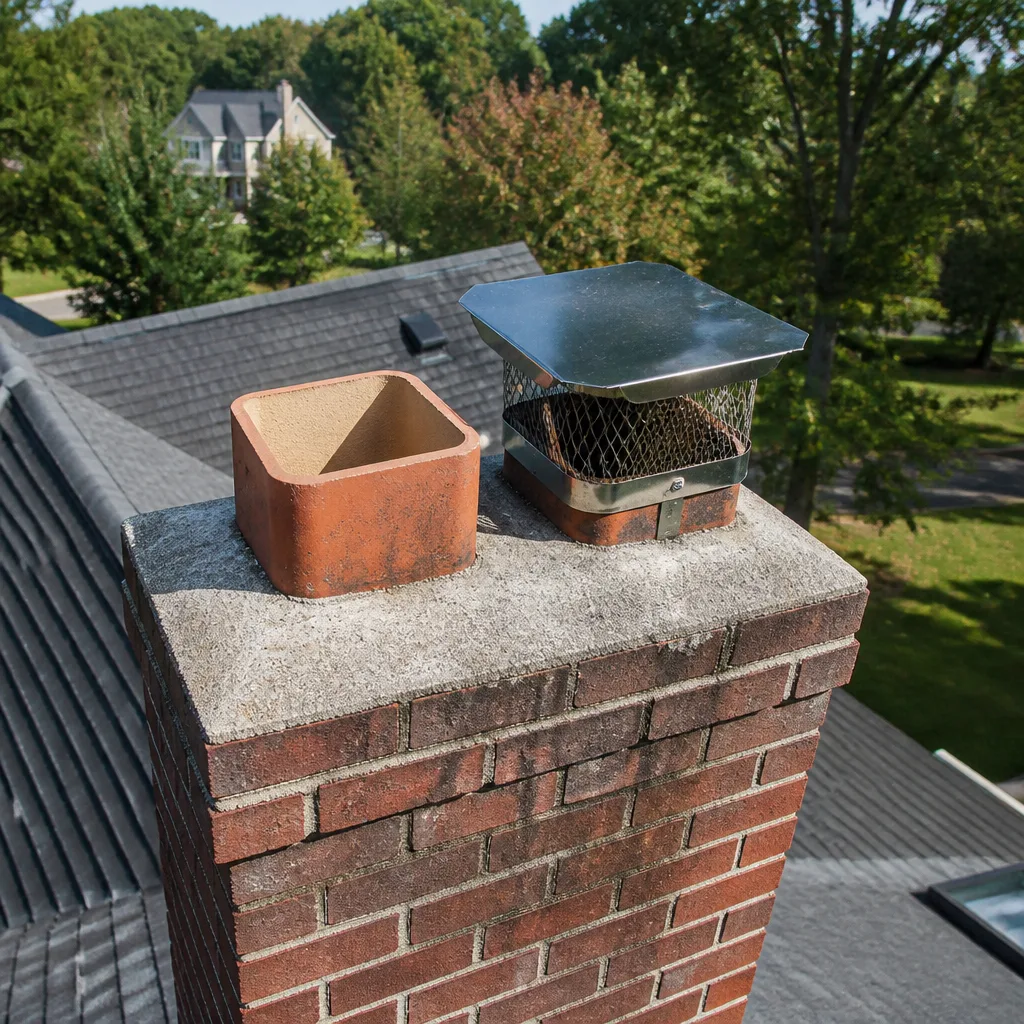
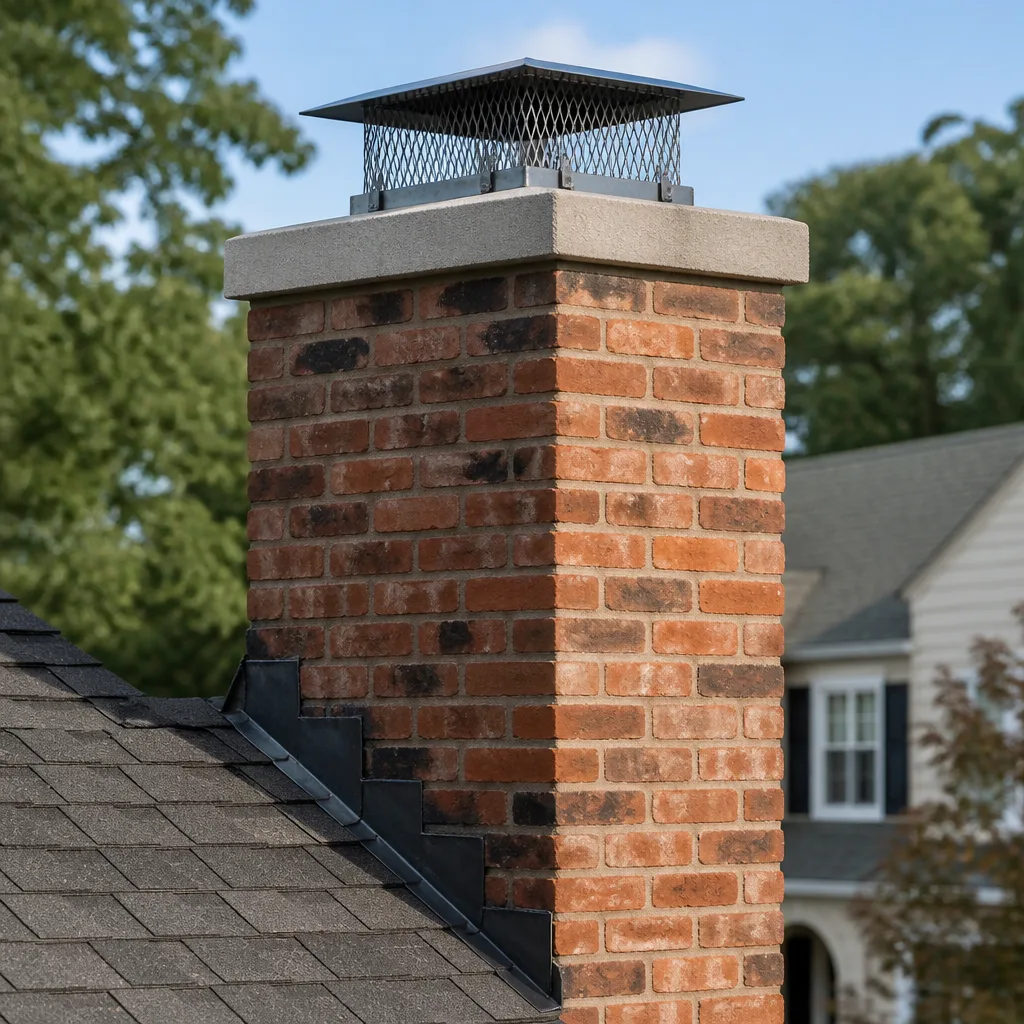
Look at your chimney crown from the ground. It’s the concrete slab at the very top of the chimney structure. Large cracks, pieces missing from the edge, or a crown that’s crumbling all carry the same message: water is entering the chimney structure. On Arden-Arcade homes built in the 1960s through the 1980s, crowns were sometimes poured too thin, around an inch or less, and with no expansion joint between the crown and the flue tile. If you have that construction style, your crown is a candidate for replacement regardless of how it looks from the ground.
Efflorescence and What It Means for Your Flue System
Efflorescence is the white, chalky staining that appears on the outside of brick chimneys. It’s caused by water moving through the masonry and dissolving soluble salts inside the brick and mortar. When the water reaches the surface and evaporates, the salts remain behind as a white deposit. Efflorescence itself is cosmetic. The water movement behind it is not. By the time you see efflorescence on the exterior, water has been moving through the chimney structure for months. That water has been in contact with your flue liner, your mortar joints, and possibly your damper.
If you see efflorescence, the next step is to determine where the water is entering. In Arden-Arcade, the most common culprits are a failed crown, a missing or damaged chimney cap, or deteriorated mortar joints. The presence of efflorescence does not always mean the flue liner is damaged, but it does mean the chimney’s water protection system has failed. Addressing it early keeps a cosmetic issue from becoming a structural one.
When a Warning Sign Is Informational vs. When to Stop Using the Fireplace
Not every warning sign requires immediate action. Some are informational: they tell you something to watch or a maintenance item to schedule. Others are hard stops: the fireplace should not be used again until a professional has inspected it. Here’s the framework we use with Arden-Arcade homeowners.
Informational Signs: Schedule an Inspection, Continue Using with Caution
- Powdery soot on the firebox walls. This is normal combustion residue. It means your chimney is doing its job. It also means you’re due for your annual cleaning, but it’s not a stop-use condition.
- Faint musty odor on humid days. This suggests early moisture intrusion, usually from a cap or crown issue. It warrants scheduling an inspection, but it does not mean the system is unsafe to use at this moment.
- Small hairline cracks in the chimney crown. These are early-stage. Water hasn’t caused significant damage yet. Plan for crown repair, but don’t feel urgency to stop burning.
- Smoke drafting into the room only at ignition. This is usually an air pressure issue, not a blockage. Pre-heat the flue and see if it resolves. If it does, continue using the fireplace and mention it at your next cleaning.
Stop-Use Signs: Do Not Build Another Fire Until You’ve Had an Inspection
- Glazed, shiny creosote visible on the firebox walls. This is a chimney fire waiting to happen. The flue above is almost certainly worse than what you can see.
- Tar-like odor coming from the fireplace. This is stage three creosote off-gassing. It’s a fire hazard in the flue.
- Smoke drafting into the room after the fire is established. This means the flue cannot handle its load, usually due to restriction or blockage.
- Spalling firebrick with visible gaps in mortar joints. Heat is reaching structural material behind the firebox. That’s a structural failure in progress.
- Rust staining on the damper combined with any other sign. This means water has been entering the system long enough to corrode metal. What you can’t see above the damper is probably worse.
- Animal odor or visible nesting material. Nesting material in a flue is highly flammable and also blocks proper drafting.
If you have one informational sign, schedule an inspection at your convenience. If you have any stop-use sign, or two or more informational signs occurring together, stop using the fireplace and call us at (833) 589-9906. We’ll assess the system and tell you exactly what you’re looking at.
The Dryer Vent Connection: A Second Fire Hazard Worth Checking
Most Arden-Arcade homeowners don’t connect chimney health with dryer vent health, but they share a common failure pattern. Both are venting systems that move hot, particle-laden air out of your home. Both accumulate flammable residue when not cleaned. Both fail gradually and quietly. The difference is that people associate chimney fires with fireplaces, while dryer vent fires catch homeowners completely by surprise.
The warning signs for a clogged dryer vent are easy to identify. The dryer takes longer than one cycle to dry a normal load. The laundry room gets unusually warm while the dryer runs. The exterior vent hood doesn’t open when the dryer is blowing. You can smell a burning lint odor. Any of these means the vent pipe is restricted. Lint is highly combustible, and once it accumulates in enough volume, the heat from the dryer can ignite it.
Here’s the practical consideration: if you’re scheduling a chimney cleaning, the dryer vent is often in the same house and frequently just as overdue. A dryer vent cleaning in Arden-Arcade can be done on the same visit, and it addresses the second most common residential fire ignition source. Two fire hazards, one call. We don’t schedule a second appointment or refer you to another contractor. If we’re already at your house, we handle both systems.
In Arden-Arcade, dryer vents in single-story homes built in the 1970s and 1980s often run long distances from the laundry room to the exterior wall. The longer the run, the more lint accumulates per cycle, and the more frequently the vent needs cleaning. A dryer vent that takes a 90-degree turn within the wall cavity is another common configuration here, and every turn is a lint catch point.
Common Mistakes to Avoid
- Assuming no smoke means no creosote. Most creosote buildup occurs without any visible smoke problem. The draft continues to work, so the homeowner assumes the chimney is clean. Creosote accumulates silently. Annual inspection is the only way to know your actual buildup level.
- Painting over efflorescence. Paint seals the surface and traps water inside the masonry. The white staining disappears temporarily, and the water damage accelerates. Efflorescence should be cleaned with proper masonry techniques, not painted.
- Ignoring a musty smell because it’s “just the old house.” Arden-Arcade has many homes from the 1960s through 1980s, and owners of older homes often normalize odd smells. A musty chimney odor is never normal. It’s moisture intrusion and it has a specific source.
- Burning unseasoned wood to save money on firewood. Green wood burns cooler, creates more smoke, and produces creosote at a far higher rate. The money saved on firewood gets spent on a more aggressive chimney cleaning, and in the meantime, the fire risk is elevated.
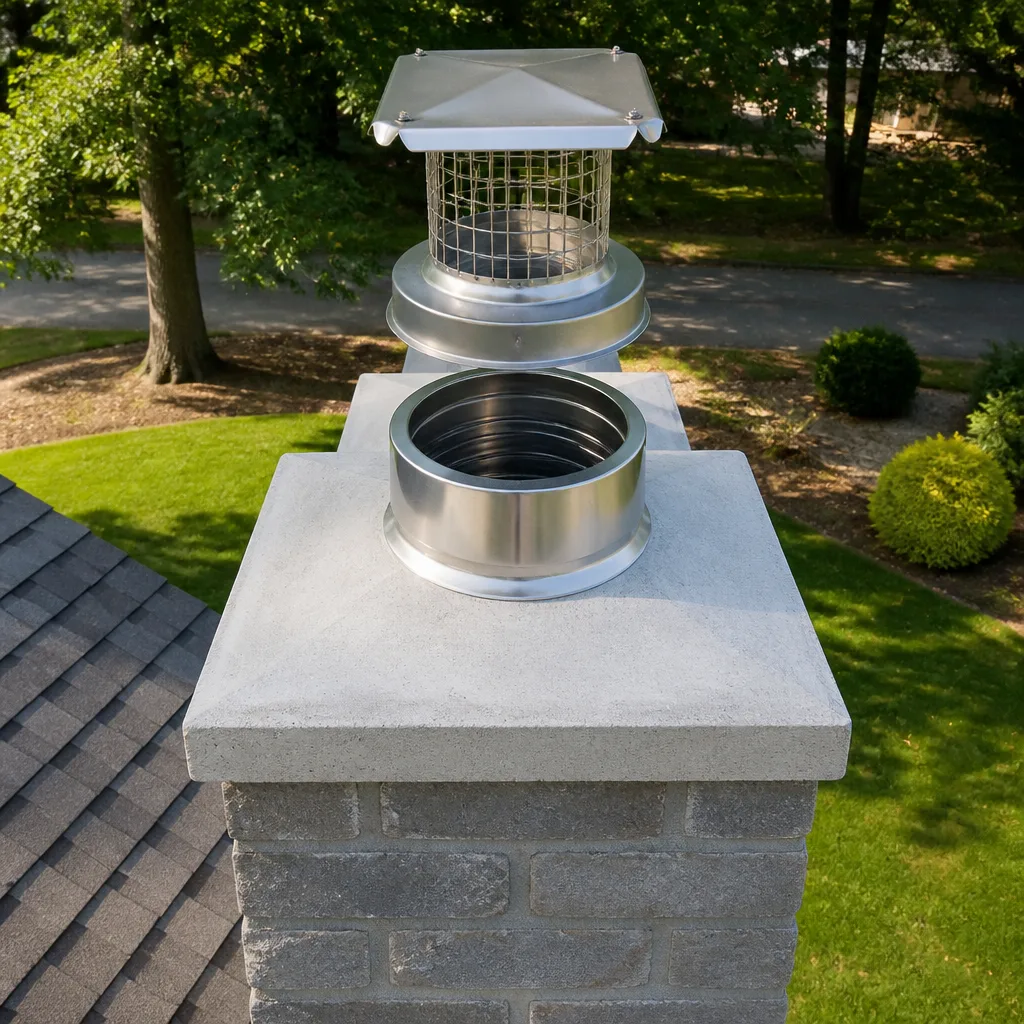
- Using the fireplace without a cap because “it’s always been fine.” A missing chimney cap is the single most common cause of water damage and animal intrusion we find in Arden-Arcade. It’s a $200 to $400 fix that prevents $3,000 to $8,000 in damage.
- Waiting until fall to schedule a chimney cleaning. Every Arden-Arcade sweep company is booked solid from October through January. If you schedule in spring or summer, you get your choice of dates, and you start the burning season knowing exactly what condition your chimney is in.
- Assuming a gas fireplace doesn’t need chimney maintenance. Gas inserts and gas log sets still vent through a flue. They still need caps, still need annual inspection, and still develop problems. The fire risk is lower than wood, but carbon monoxide risk is real if the venting system fails.
When to Call a Professional
Call a chimney professional when you see any stop-use sign, when two or more informational signs appear together, or when you haven’t had an inspection in over a year. Call immediately if you notice a tar-like odor, glazed creosote, smoke entering the room from an established fire, or rust staining that wasn’t there last season. These are not conditions that resolve on their own. They compound. Chimney Sweep Arden-Arcade offers free estimates in Arden-Arcade and surrounding neighborhoods. Call (833) 589-9906, and we’ll put eyes on the system and tell you exactly what you’re dealing with, supported by what we can show you on-site. If you’d rather start with a thorough overview of what we do, our Chimney Sweep Arden-Arcade home page covers the full scope.
See the difference
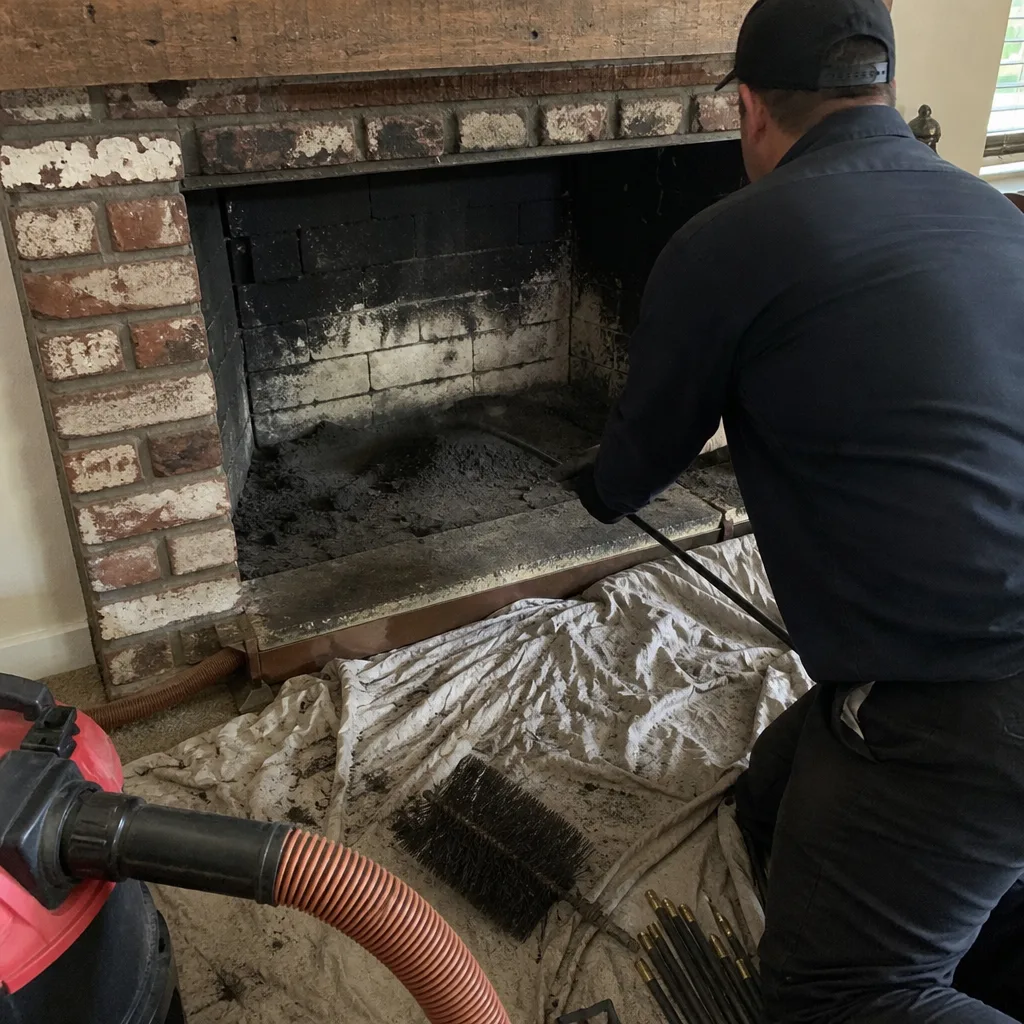 Before
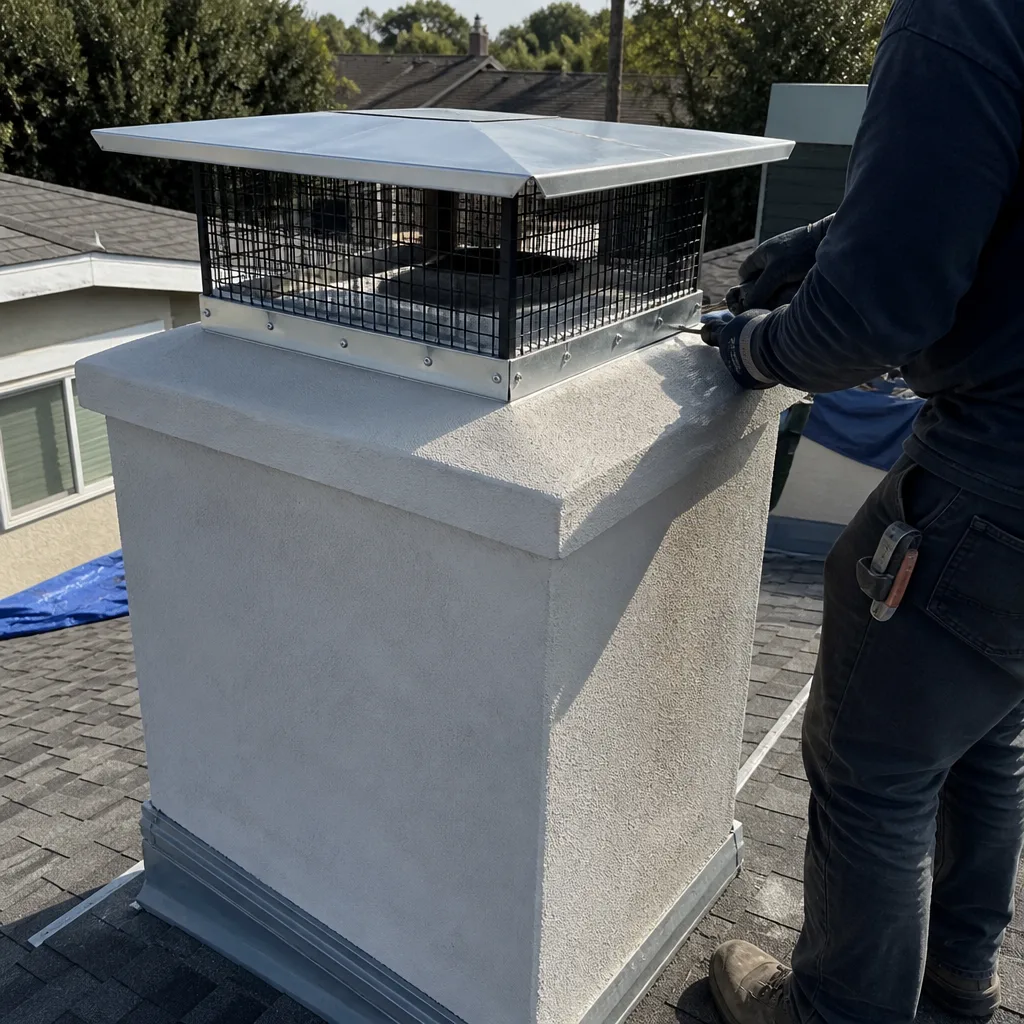 After
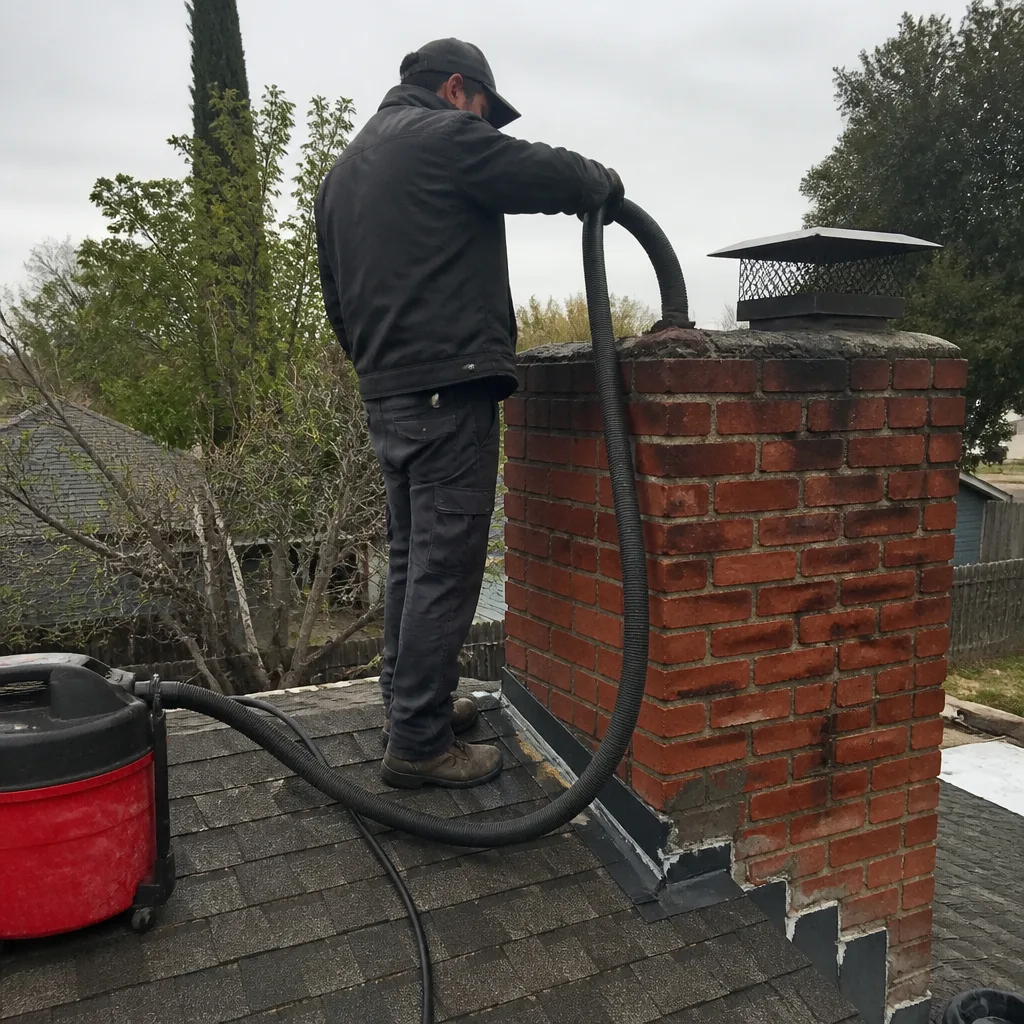 Before
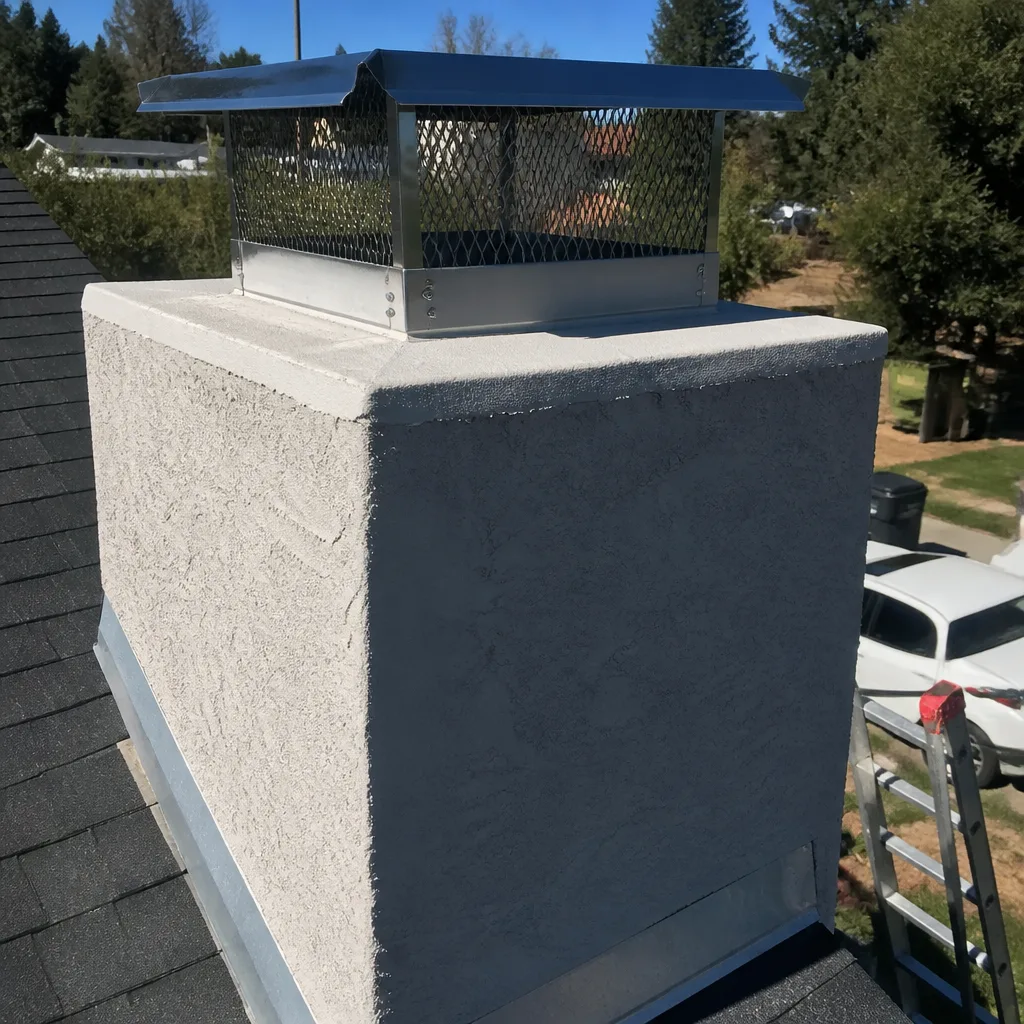 After
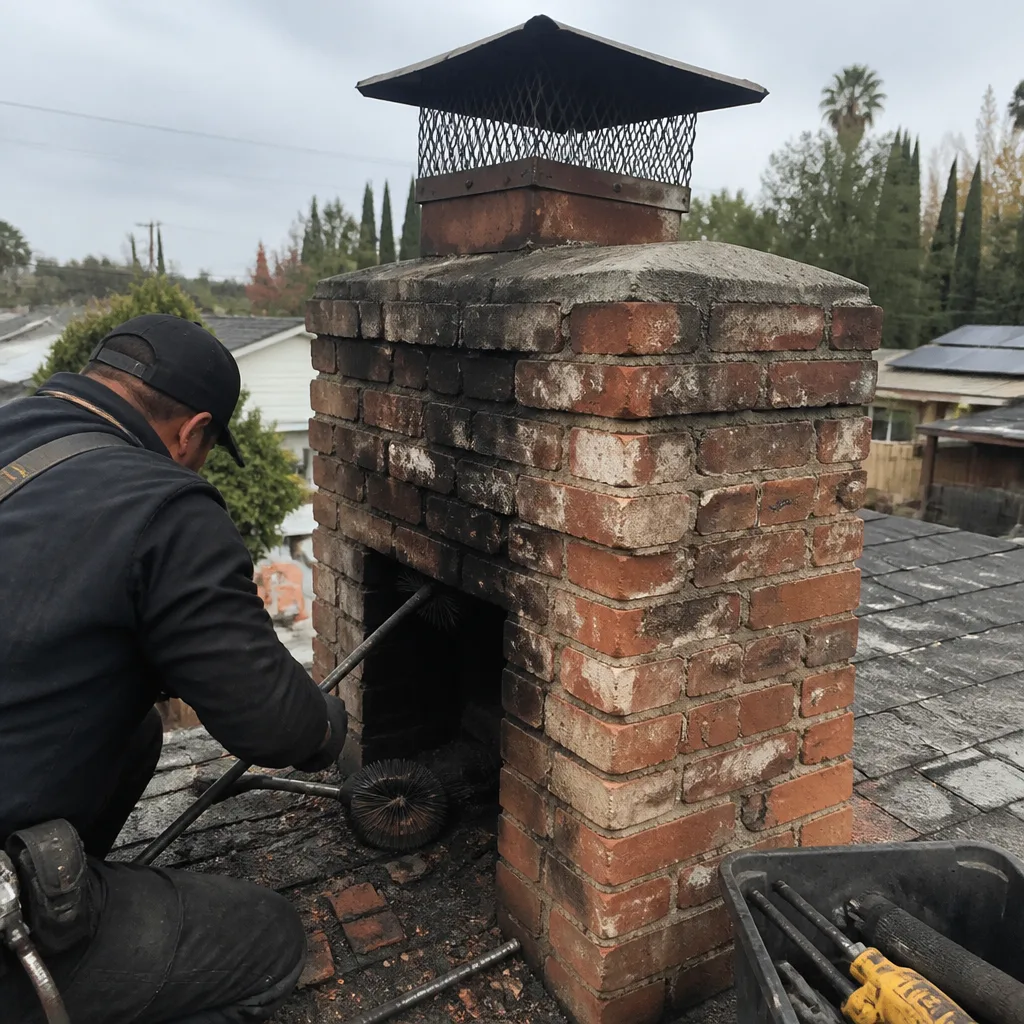 Before
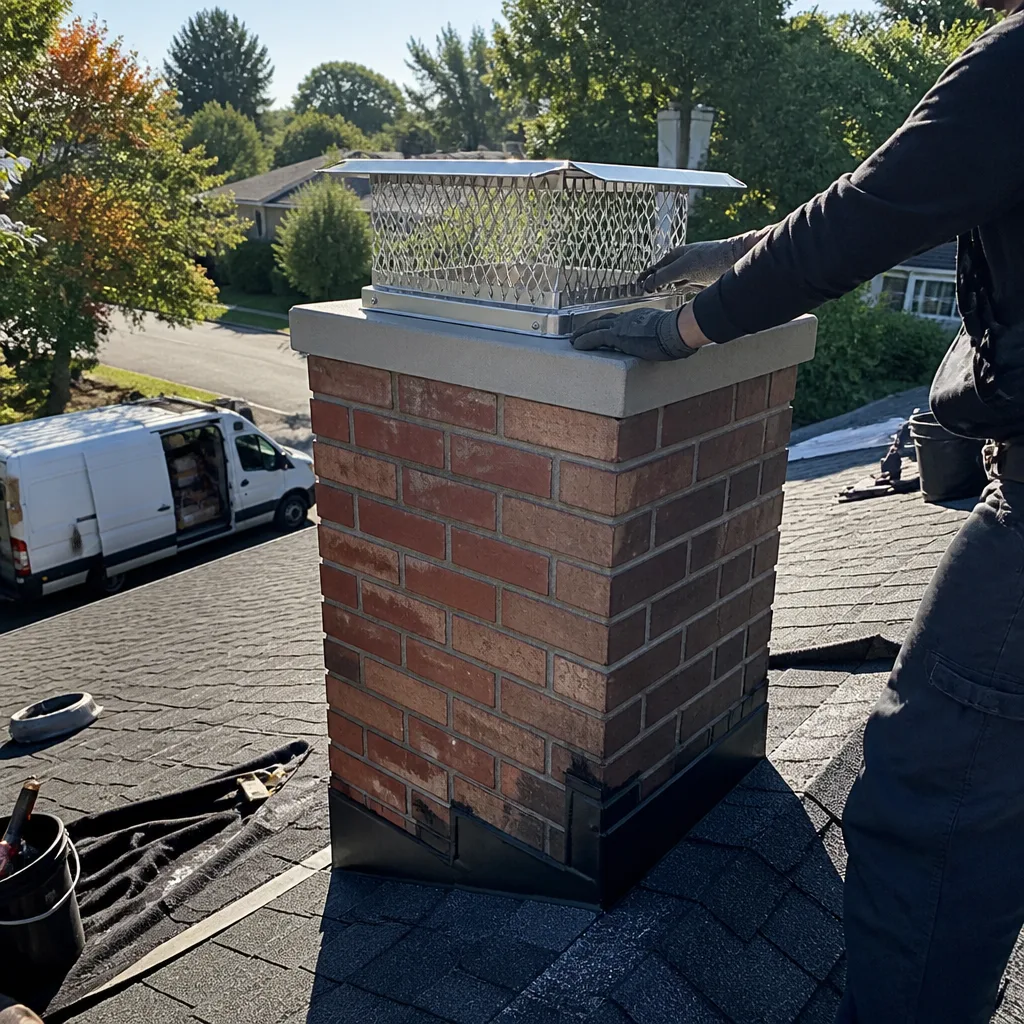 After
Frequently Asked Questions
A chimney needs cleaning when creosote buildup reaches 1/8 inch or more anywhere in the flue, which is the threshold the National Fire Protection Association uses as the trigger for cleaning. You can’t measure this from the ground, but visible indicators include glazed black residue in the firebox, a tar-like odor, or smoke drafting problems that persist after pre-heating the flue. In Arden-Arcade, most wood-burning fireplaces used regularly through the winter need cleaning once per year at minimum. Call (833) 589-9906 for an assessment and a straight answer on whether yours is due.
A standard chimney sweep in Arden-Arcade typically runs between $180 and $340 depending on the level of creosote buildup, the height of the chimney, and whether the system has been cleaned recently. Homes with stage three glazed creosote cost more because the removal process is more involved. If the sweep reveals damage that needs repair, our chimney repair in Arden-Arcade services can often be scheduled for the same visit. Call (833) 589-9906 for an exact quote. Estimates are free.
Creosote has a sharp, tar-like, almost asphalt smell. It’s most noticeable on humid days, during summer when the chimney reverses its draft, or in rooms with negative air pressure. If you smell it, the creosote layer is thick enough to be off-gassing, which means you’re well past due for a cleaning. The smell is a warning sign, not a decorative quirk of having a fireplace.
The standard answer is once per year for wood-burning fireplaces used regularly during the winter season. The precise answer depends on usage: a fireplace used three times per week from November through February accumulates creosote faster than one used once per week. Unseasoned wood accelerates buildup. In Arden-Arcade, where the burning season runs roughly from November through early March, an annual sweep is the baseline. Heavy users should consider a mid-season check.
Creosote accumulates. Stage one becomes stage two, stage two becomes stage three glazed creosote. The flue narrows. Drafting degrades. Water intrusion from an unnoticed cap or crown problem continues unchecked. By year two, you’re usually looking at a more expensive cleaning, a higher fire risk, and in many Arden-Arcade homes, early-stage masonry damage that would have been caught in year one. The cost of skipping a cleaning is never just the cost of the missed cleaning. It’s the compounding maintenance debt. Call (833) 589-9906 to get caught up.
You can inspect your own chimney from ground level, and we encourage every Arden-Arcade homeowner to do that. What you cannot do safely from the ground is measure creosote thickness, identify early flue liner damage, or clean a flue properly. Chimney cleaning requires roof access, specialized brushes sized to the flue, and the training to recognize what the creosote pattern means about how the system is performing. More importantly, when we clean a chimney, we look for structural issues at the same time. Most of the serious problems we find in Arden-Arcade homes are found during a routine cleaning, because that’s when someone trained was finally looking at the whole system, and if you’re deciding who to hire, our guide on Choosing the Right Chimney Cleaning Brand: A Buyer’s Guide for Arden-Arcade covers what to ask. We show you what we find, with photos where relevant. You don’t have to take our word for anything.
The Bottom Line
Chimney problems don’t start with dramatic symptoms. They start with a faint musty smell on a humid day, a white stain spreading on exterior brick, a shiny black patch on the firebox wall, or a brief moment of smoke rolling into the room when you first light a fire. Each sign on its own is easy to dismiss. Read together, they tell a clear story about the condition of your chimney system. Arden-Arcade’s temperature swings and older housing stock make these warning signs more prevalent here than in milder or newer markets. Learn the signs. Check your firebox. Schedule your annual inspection before burning season. And if you see two warning signs together, stop using the fireplace and call. The fix is almost always cheaper before the damage compounds. Call (833) 589-9906 for a free estimate from Chimney Sweep in Arden-Arcade.
Written by the team at Chimney Sweep Arden-Arcade, serving Arden-Arcade since 2017.